A Virtual Ride Around the Imperial Palace
August 18, 2026
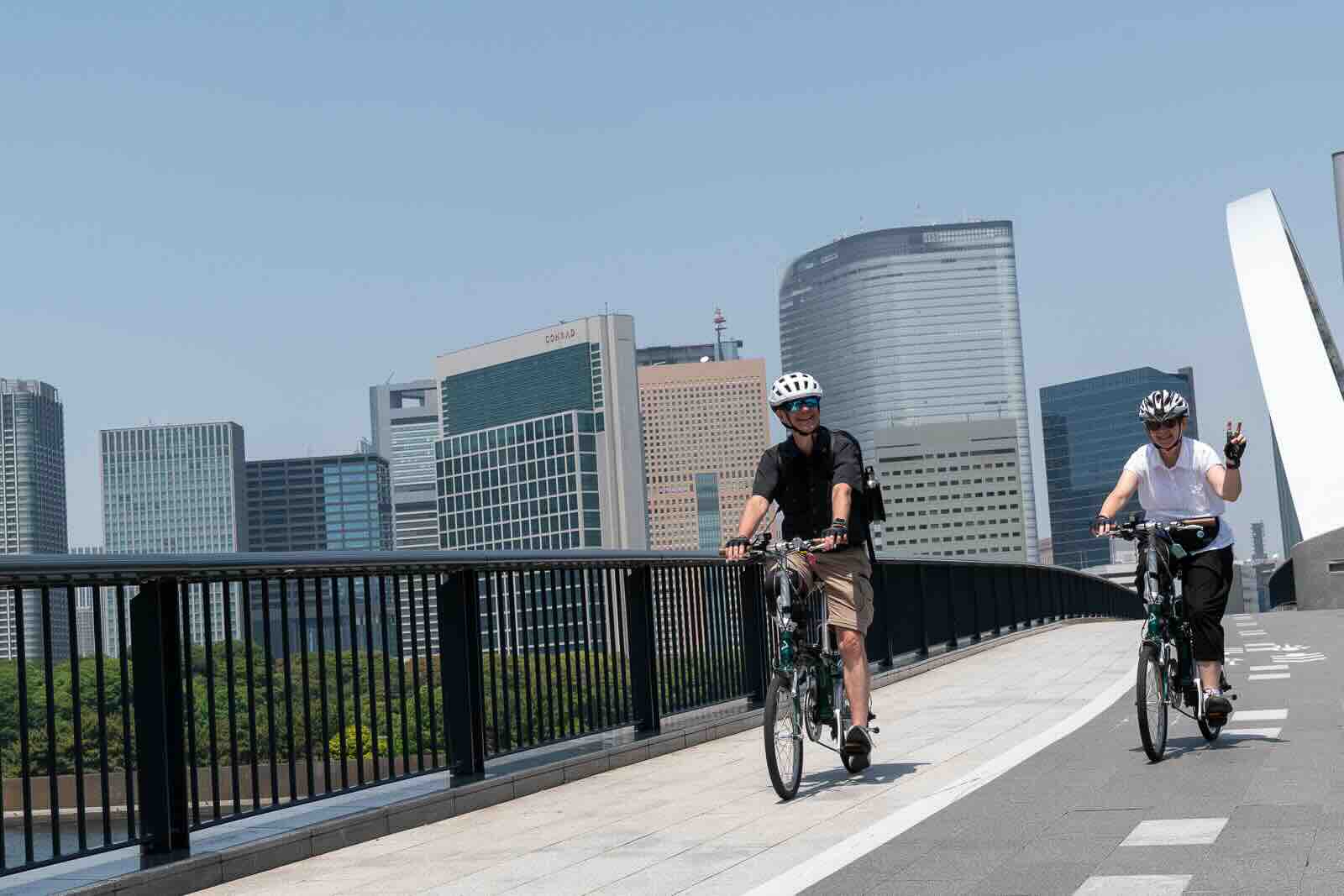
For my private e-bike tour, I often head for the Imperial Palace with my guests. It’s iconic, and it sits right at the center of this city.
Even though the Palace is smaller than the former castle, it’s still too big to see everything in one ride. Some areas are restricted, too.
So today, let’s do it virtually. We’ll start at Otemachi and “ride” the full loop, and I’ll point out everything I usually have to skip.
Four Areas at the Imperial Palace
Let’s keep it simple. The Palace is roughly divided into four areas.
- Area 1 is always open to the public. You can go anywhere you like, anytime.
- Area 2 is the East Gardens. Free admission, open every day except Mondays and Fridays.
- Area 3 requires joining a guided tour. Available in several languages.
- Area 4 is private. It’s where the Emperor and his family actually live.
Let me guide you area by area.
Area 1: Open to Everyone
This area is open to all, and we can ride through almost all of it. The full loop is about 5km, so let’s go around anticlockwise.
East
Otemon Gate
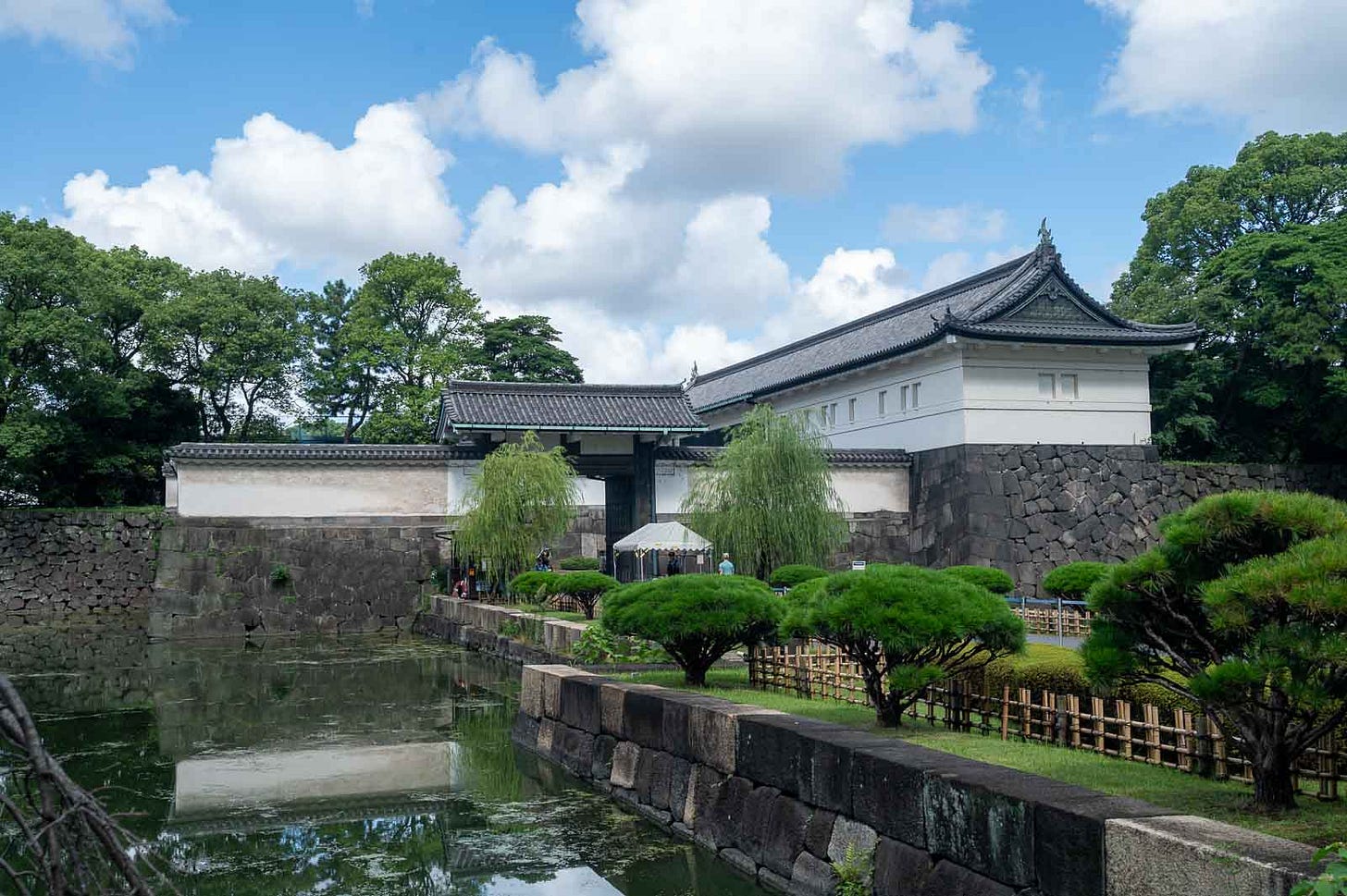
Ote means front or main, and mon means gate, so Otemon is the main gate of any castle. Since the Imperial Palace is the central part of the former Edo Castle, Otemon was once the front gate of the castle itself. In front of it now stand the skyscrapers of Otemachi, Tokyo’s central financial district (machi means town).
Wake no Kiyomaro Statue
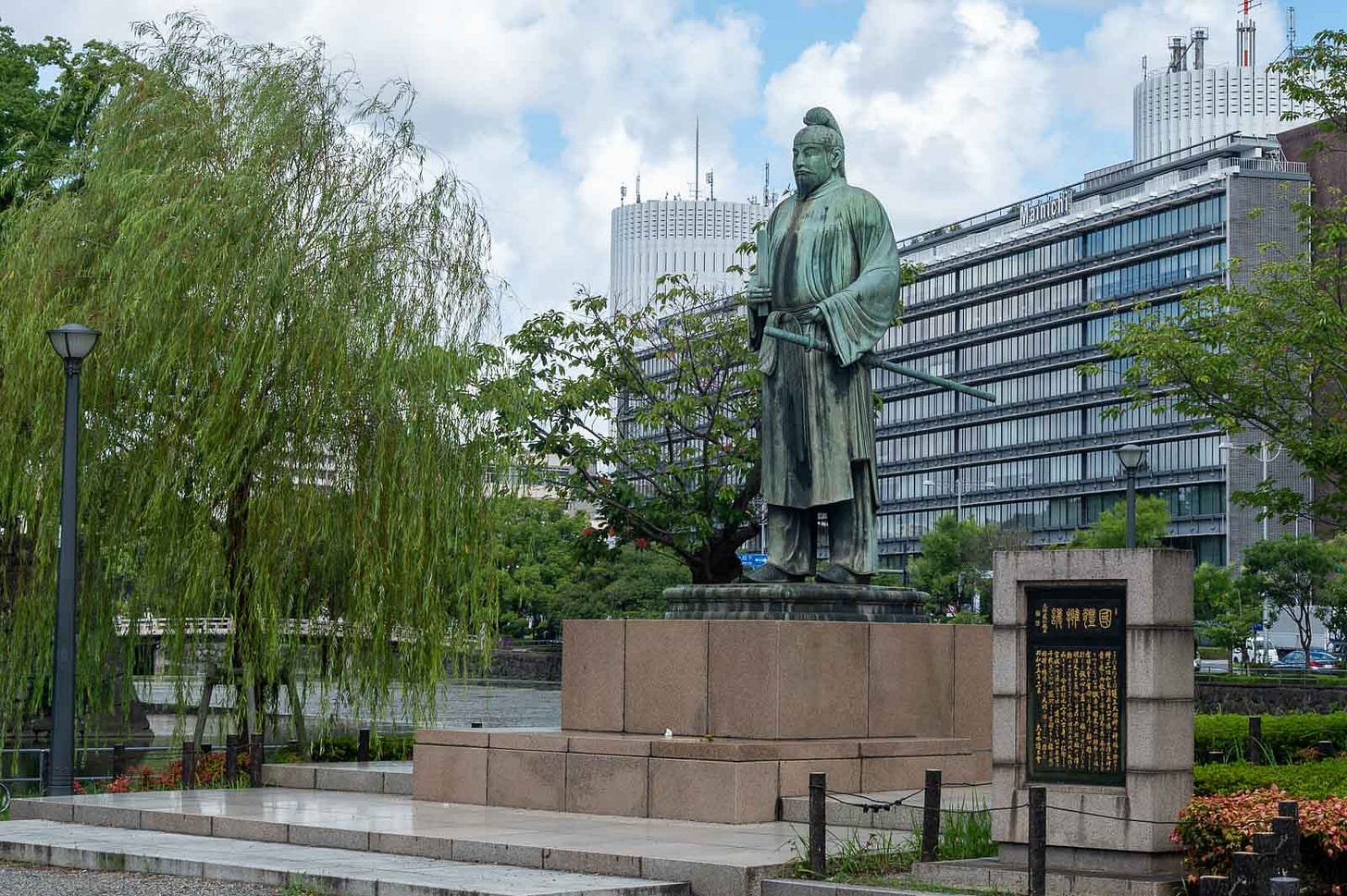
This is a statue of a nobleman from the 8th century. Wake no Kiyomaro was sent by Empress Shotoku to Usa Hachimangu Shrine to receive a message from the ancestral deity. The Empress hoped the message would approve passing the throne to Dokyo, a monk she favored. Had that happened, the imperial line would have ended there. But the message he brought back was not what she wanted to hear. Furious, she had him punished and his name changed to a humiliating one. Because he delivered the message faithfully, though, the imperial line has continued to this day, and he is remembered as the man who saved it.
Hirakawamon Gate
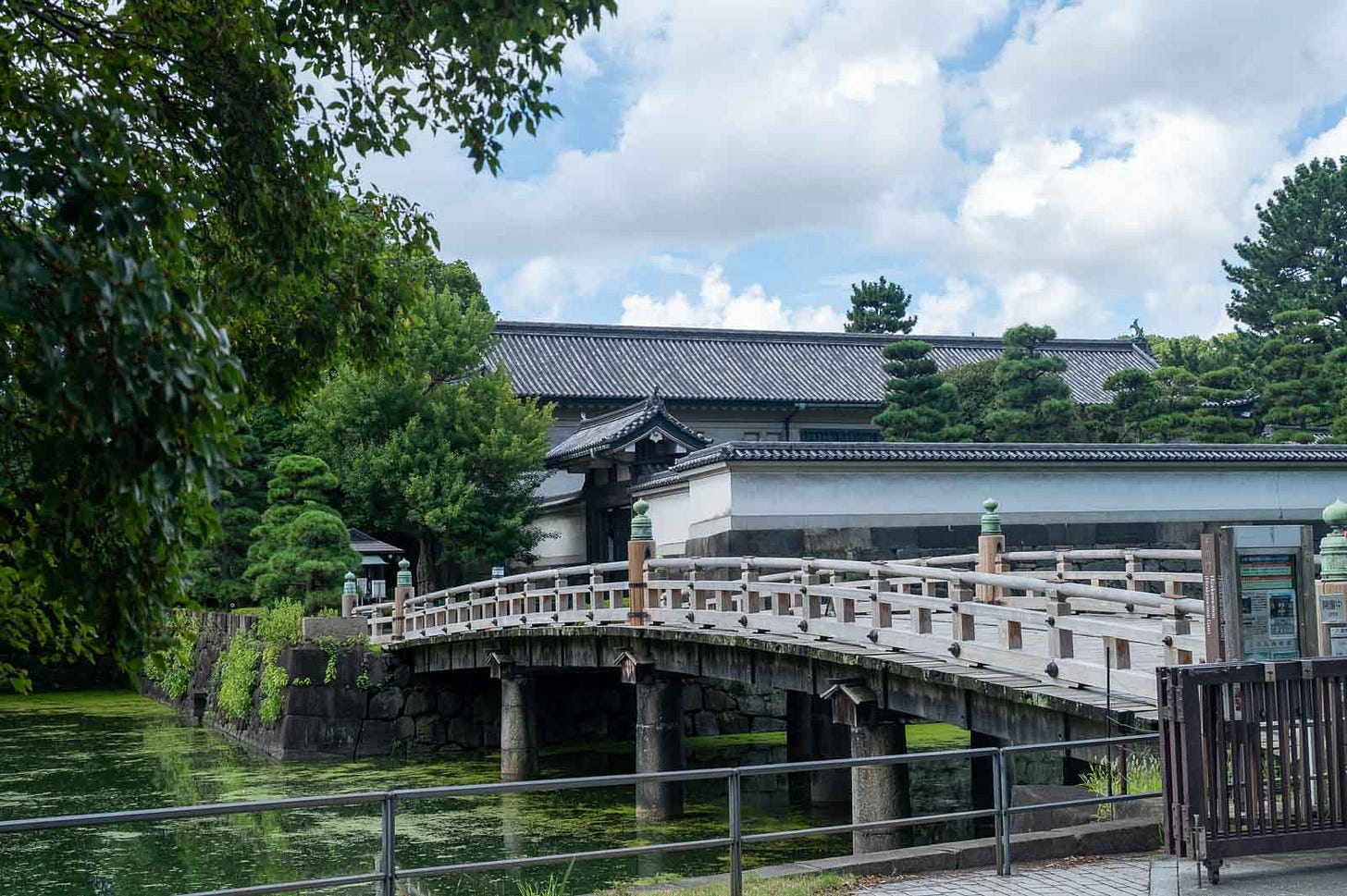
During the castle era, samurai avoided Hirakawamon, as it was considered unlucky. People believed the northeast was the direction evil spirits came from, and this gate sits exactly that way, so it was usually kept closed.
North
Kitahanebashimon Gate
One of three gates into the East Gardens, along with Otemon and Hirakawamon. These three open only when the gardens themselves are open. If you want to see the keep foundation, this is the closest entrance. It sits on higher ground, so take a photo before going in. The view of the stone walls and moats is worth it.
Shimizumon Gate
Personally, I love this gate because it’s always quiet. It sits on a hill, so you’ll climb a staircase to enter. It’s one of three gates open to pedestrians every day, along with Tayasumon and Sakuradamon, but unlike those two, hardly anyone comes through here. You’ll get the serenity and tranquility of the old castle.
Kitanomaru Park
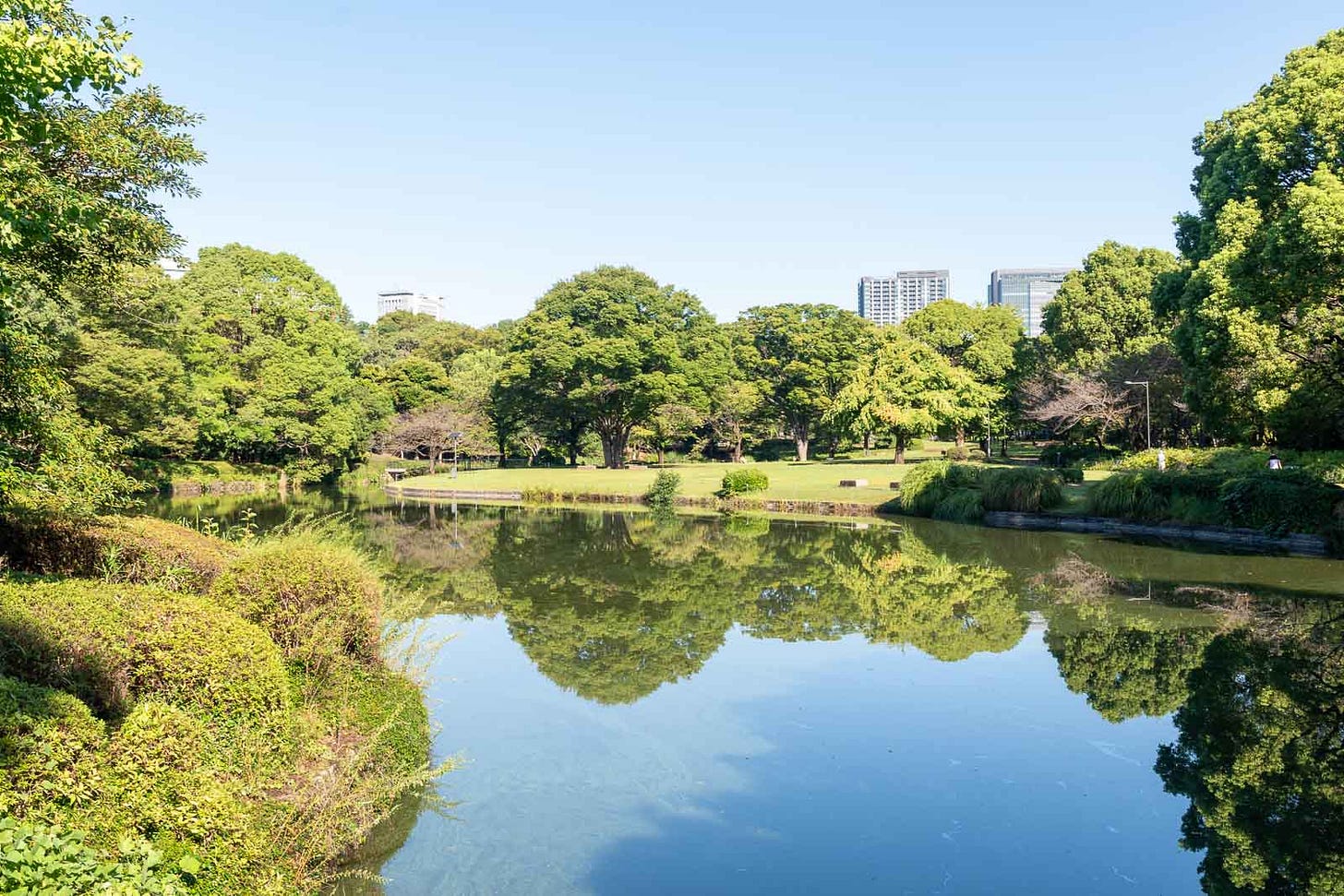
Kita means north, and as the name suggests, this park sits on the northern side of the former castle. Just 1.5km from the central business district, the landscape changes dramatically. Coming in from Shimizumon Gate to this park gives you the most peaceful approach.
Budokan
Built in 1964 for the Tokyo Olympics to host judo events. It later became famous as a concert venue, hosting the Beatles among many others, and is still used for ceremonies today.
Tayasumon Gate
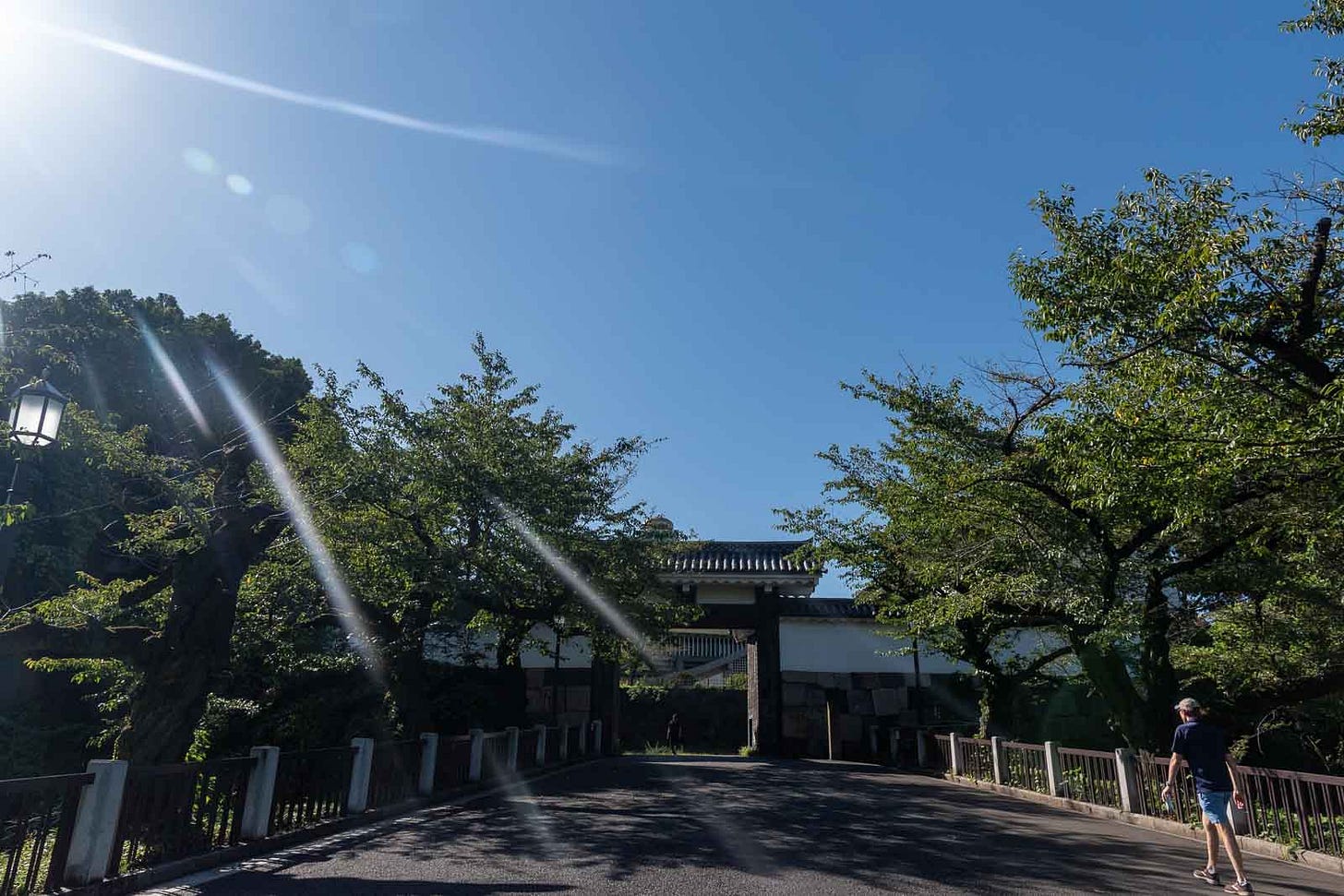
Most people use this gate to reach the Budokan, but it’s also one of the three gates open to pedestrians every day, and the structure itself is one of the oldest surviving parts of Edo Castle.
West
Chidorigafuchi
Usually another quiet spot, but during the cherry blossom season, this becomes one of Tokyo’s most famous blossom promenades, and the moat fills with rental boats.
Hanzomon Gate
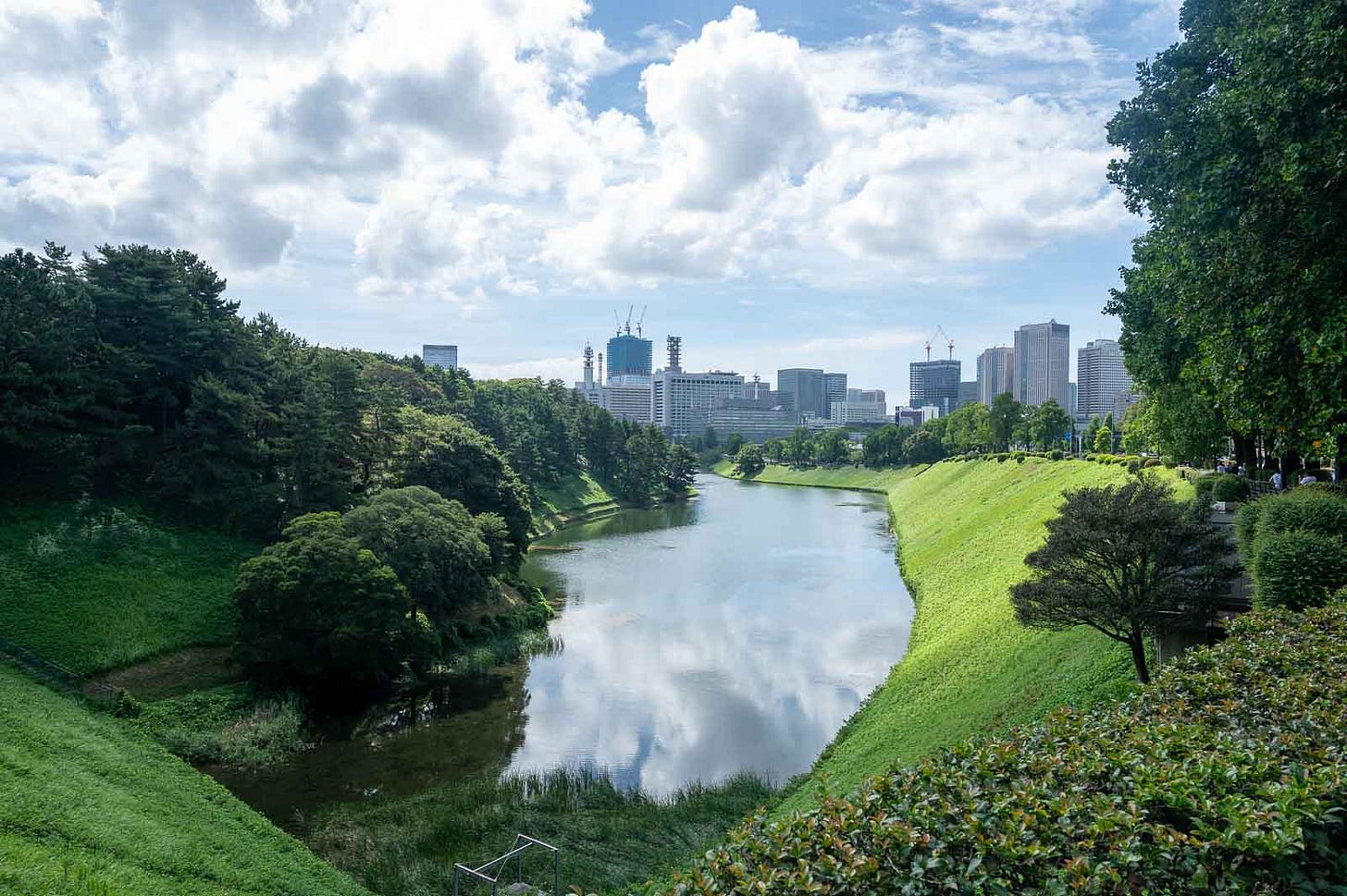
Once the back gate of Edo Castle, it’s now used by those with official appointments with the Emperor as it’s close to the residence. Security here is always tight. If you see the gate open, a VIP is probably about to arrive.
This is also one of the highest points geographically, so you get a good view over the Tokyo cityscape.
South
Sakuradamon Gate
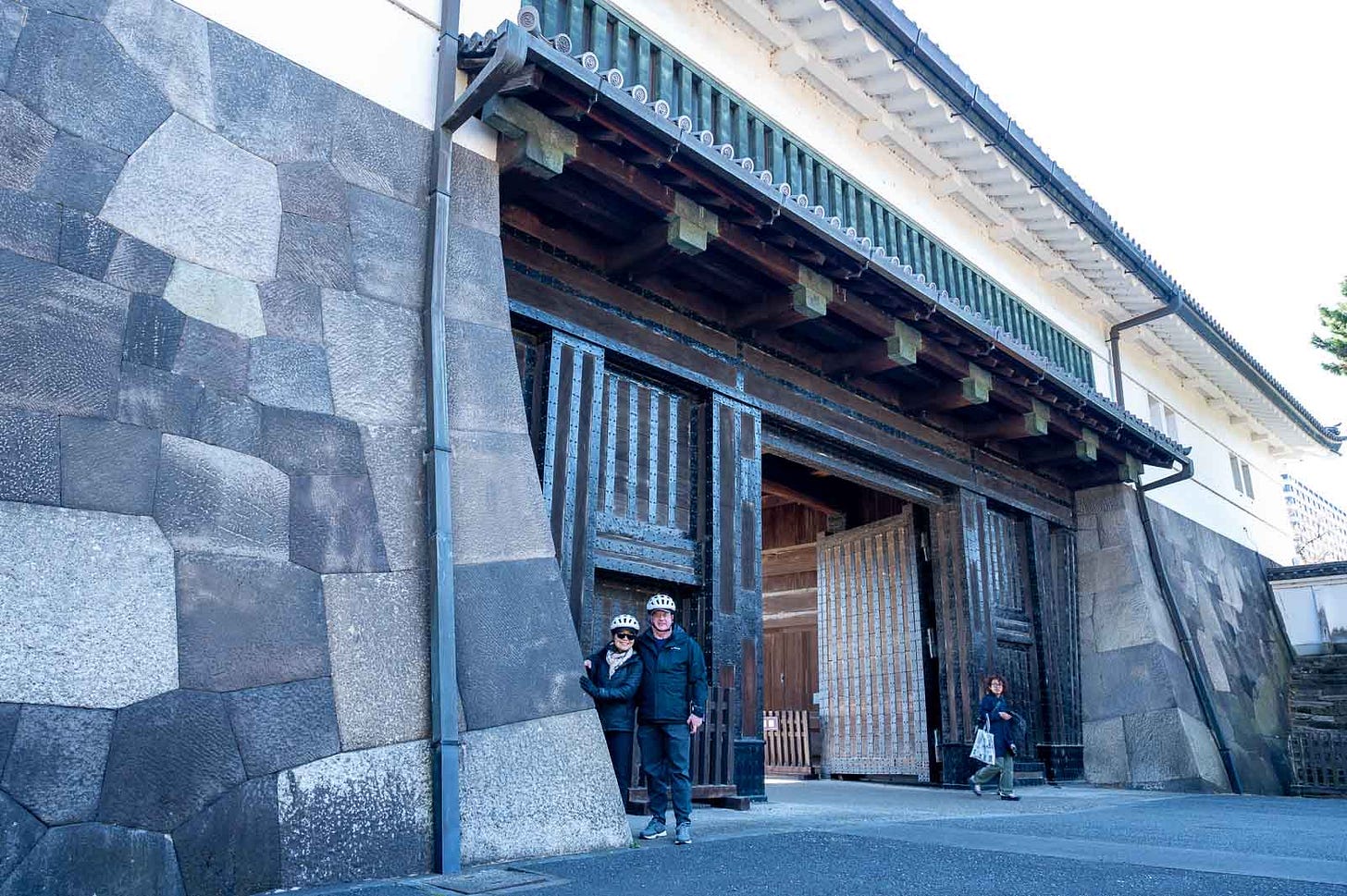
Located in front of police headquarters and near the Japanese Parliament, this is one of two gates we can ride through. For Japanese people, it’s best known for the Sakuradamon Incident of 1860, when Ii Naosuke, the shogunate’s chief minister, was assassinated just outside it. That killing badly damaged the shogunate’s authority and became one of the sparks that eventually led to the end of the samurai era.
Nijubashi Bridge
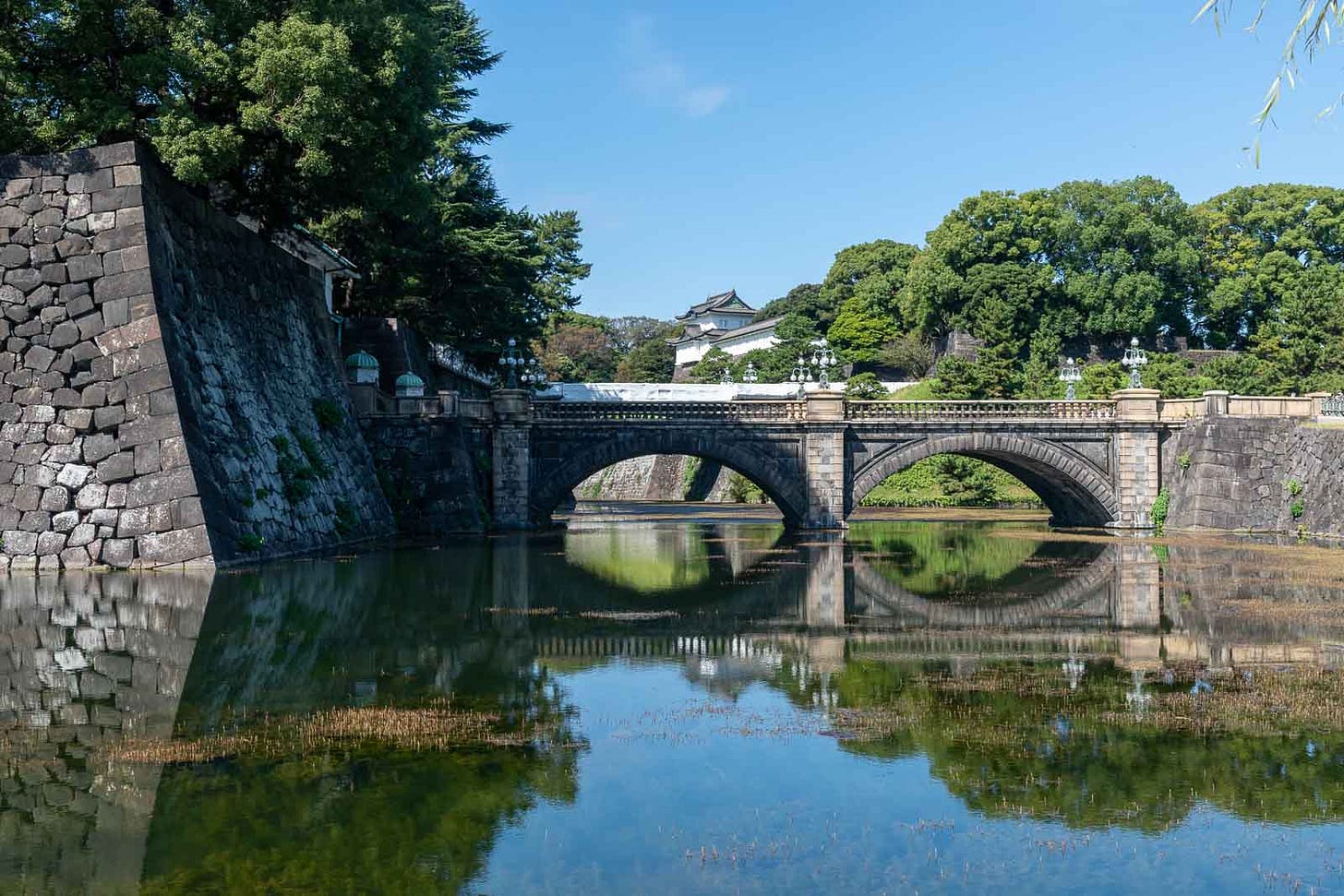
When people picture the Imperial Palace, this is usually the image. The view here looks like a postcard, and if you’re lucky, you’ll catch the reflection in the moat. My bike tour often makes this our main destination.
Imperial Palace Gaien (Outer Gardens)
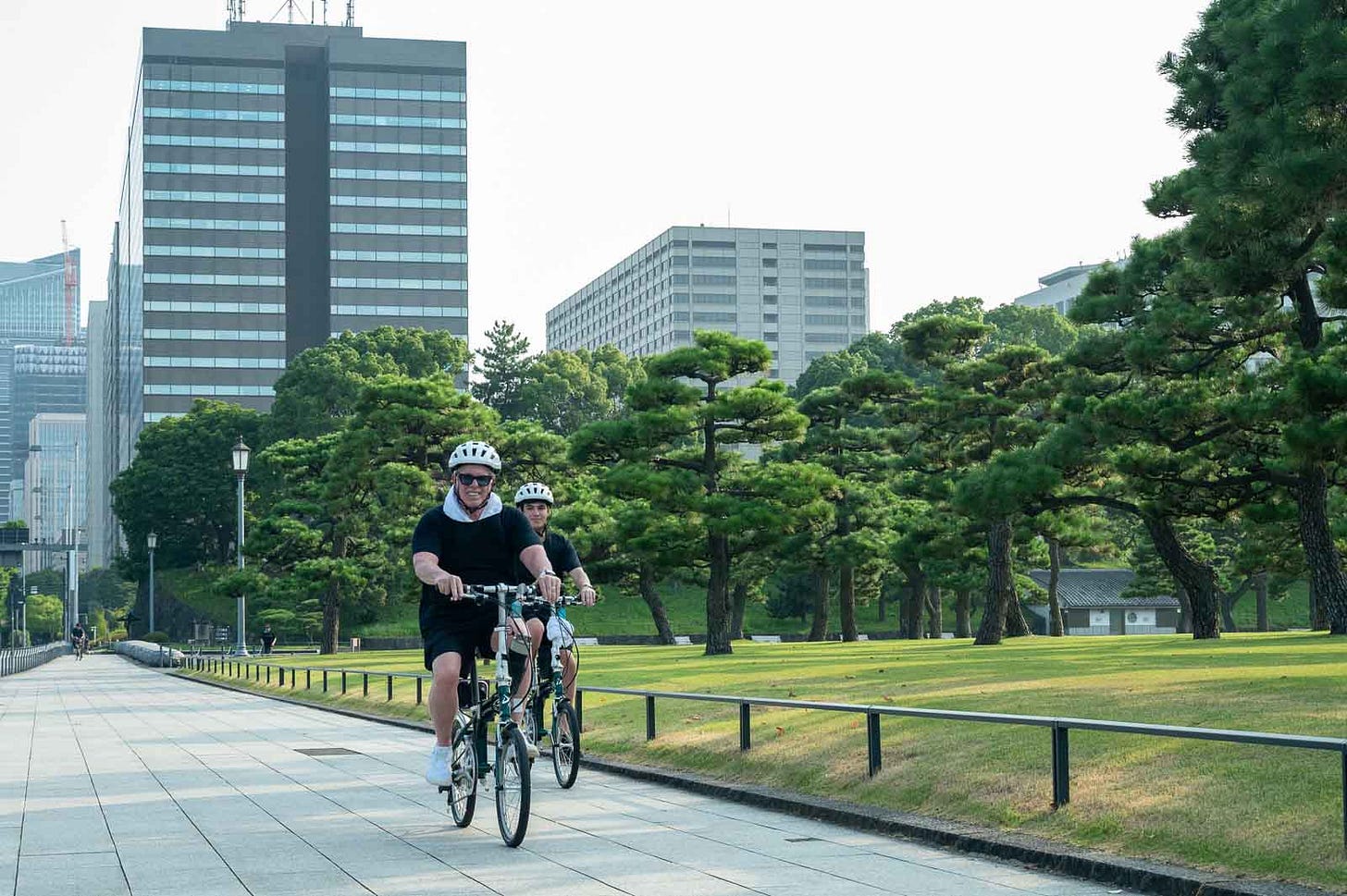
Across from Nijubashi, you’ll find hundreds of beautiful pine trees. Pines symbolize longevity and prosperity in Japan, and this variety is the one most often used for bonsai. In a way, these are some of the largest bonsai you’ll ever see.
Kusunoki Masashige Statue
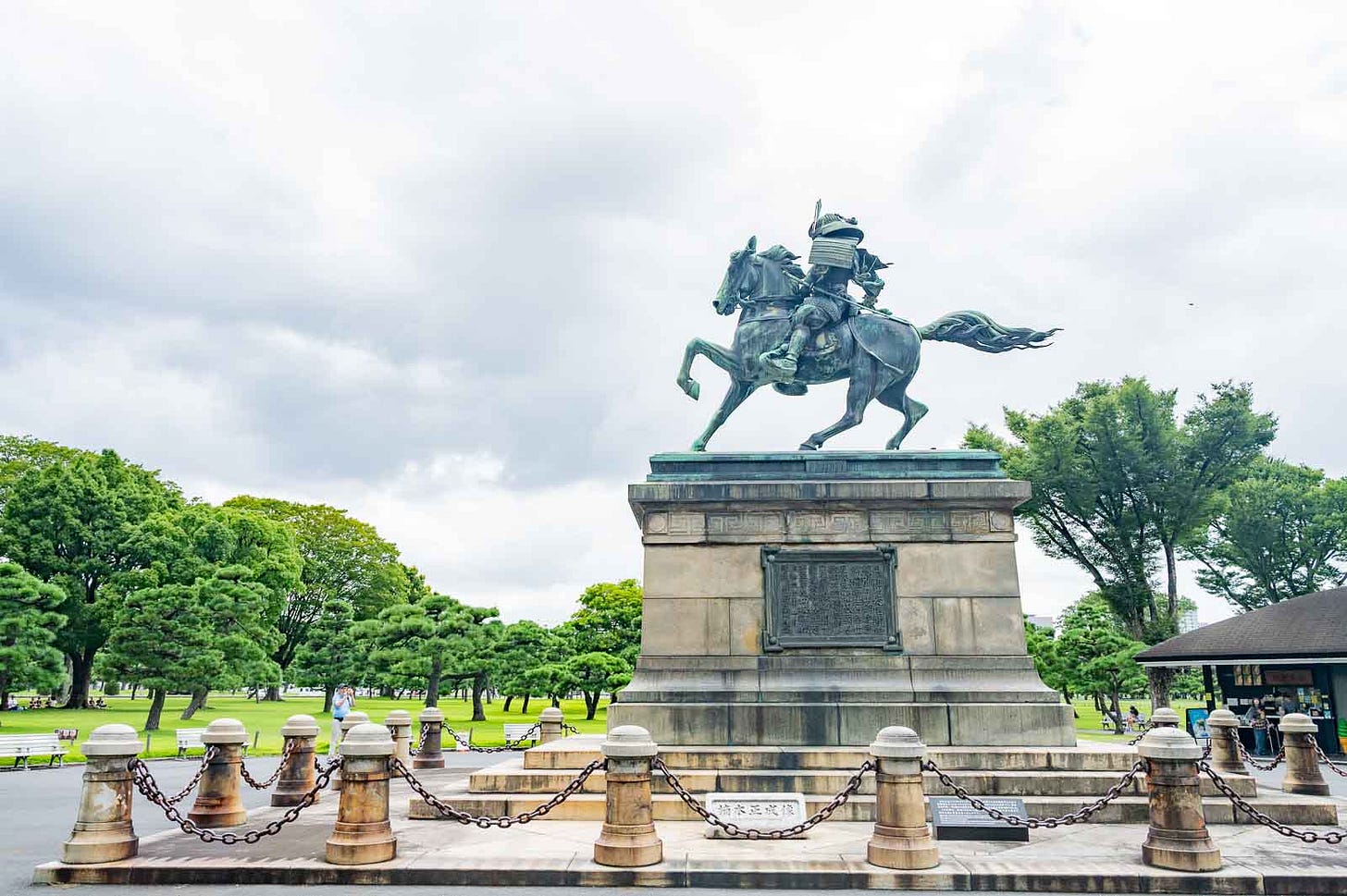
Kusunoki Masashige was a samurai of the 14th century. According to the Taiheiki, he devoted his life to Emperor Godaigo, even after his strategic advice was rejected. Before the end of WWII, he was regarded as the model of loyalty to the Emperor.
Once, while I was taking a break here with a soft-serve ice cream, group after group of tourists came to take photos at the statue. But here’s the thing: they were photographing the back of this statue. The statue faces the Palace, because Kusunoki always faces the Emperor. What looks like the front to visitors is actually the back. So in a way, all those photos were taken from behind him.
Uchisakuradamon Gate (Kikyomon Gate)
A small gate, but you may spot a long line in front of it. This is the meeting point for the guided Palace tour.
Wadakuramon Gate and Wadakura Fountain Park
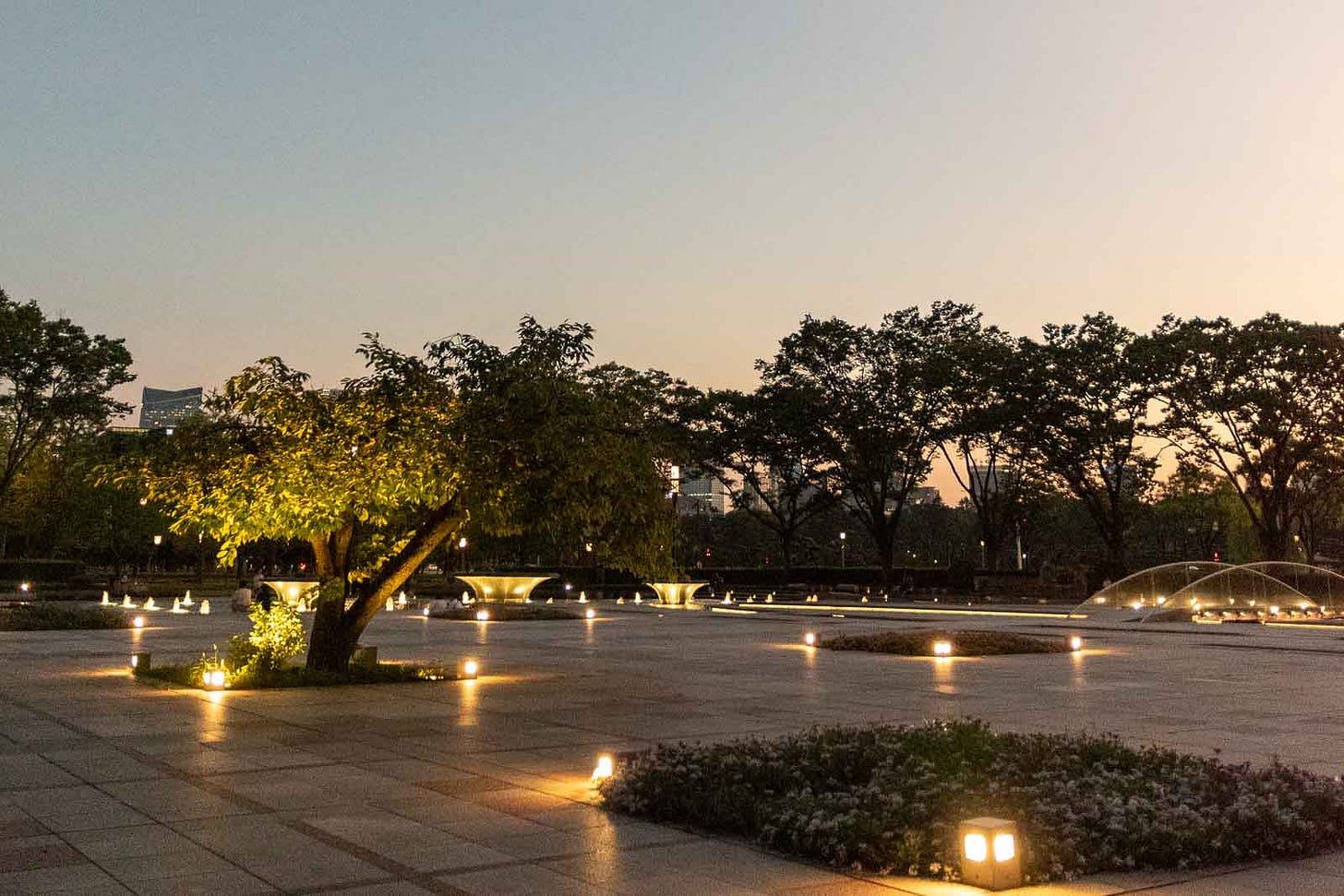
A beautiful wooden bridge crosses the moat here, right in the middle of the business district, leading into Wadakura Fountain Park. The park has several fountains that run every 30 minutes, and at night they’re beautifully lit up.
The original fountain was built in 1961 to celebrate the wedding of Emperor Akihito, now the Emperor Emeritus. It was later redeveloped to mark the 1993 wedding of the current Emperor Naruhito, and the park as you see it today was completed in 1995.
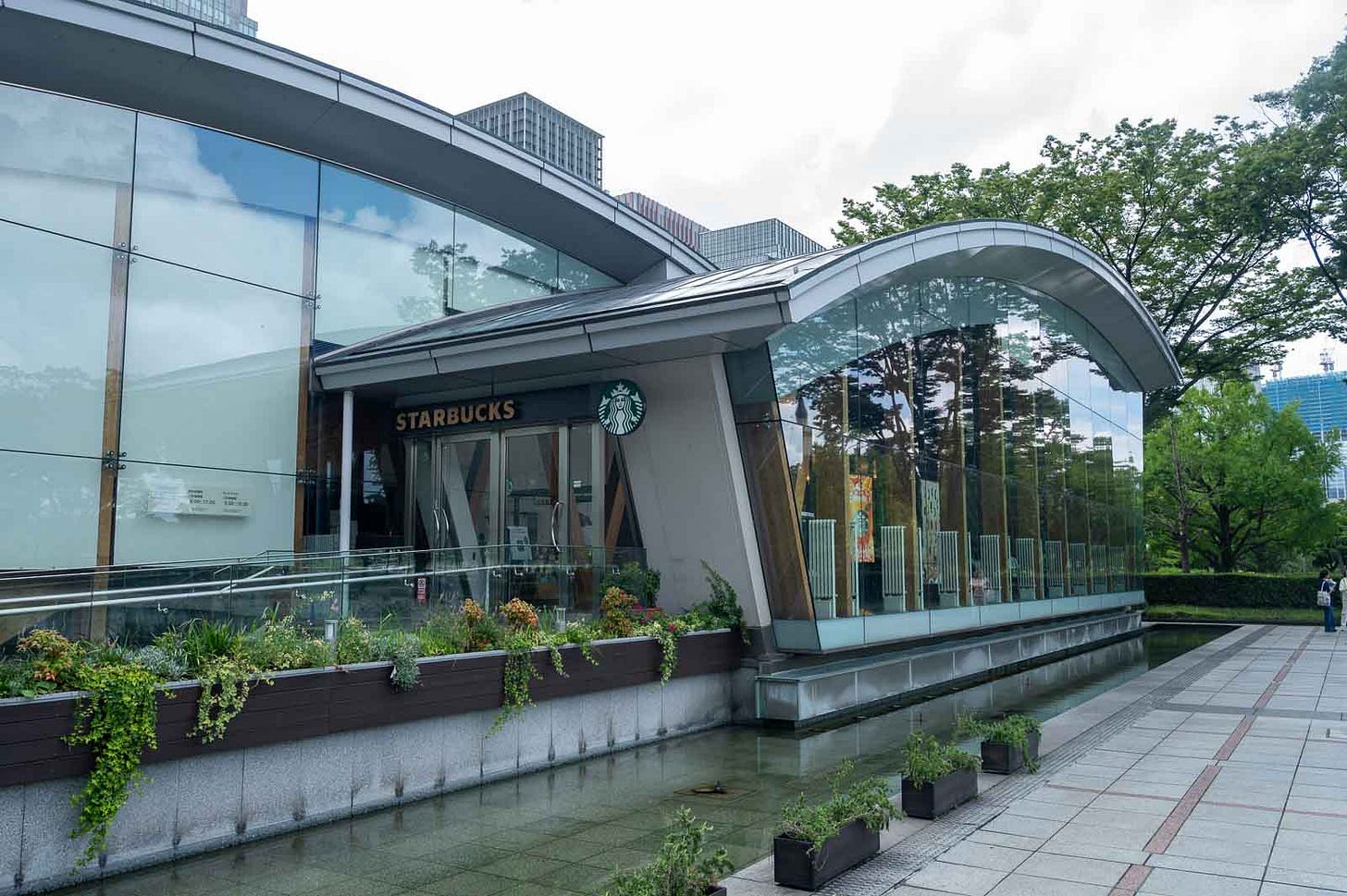
There’s also a large Starbucks here. It opened in December 2021 as the first store in Japan certified under the Greener Stores Framework, an international standard Starbucks developed with the WWF. The store encourages customers to bring their own bottles, serves drinks in reusable cups as the default, and even has a free water refill station.
Tatsumi Yagura
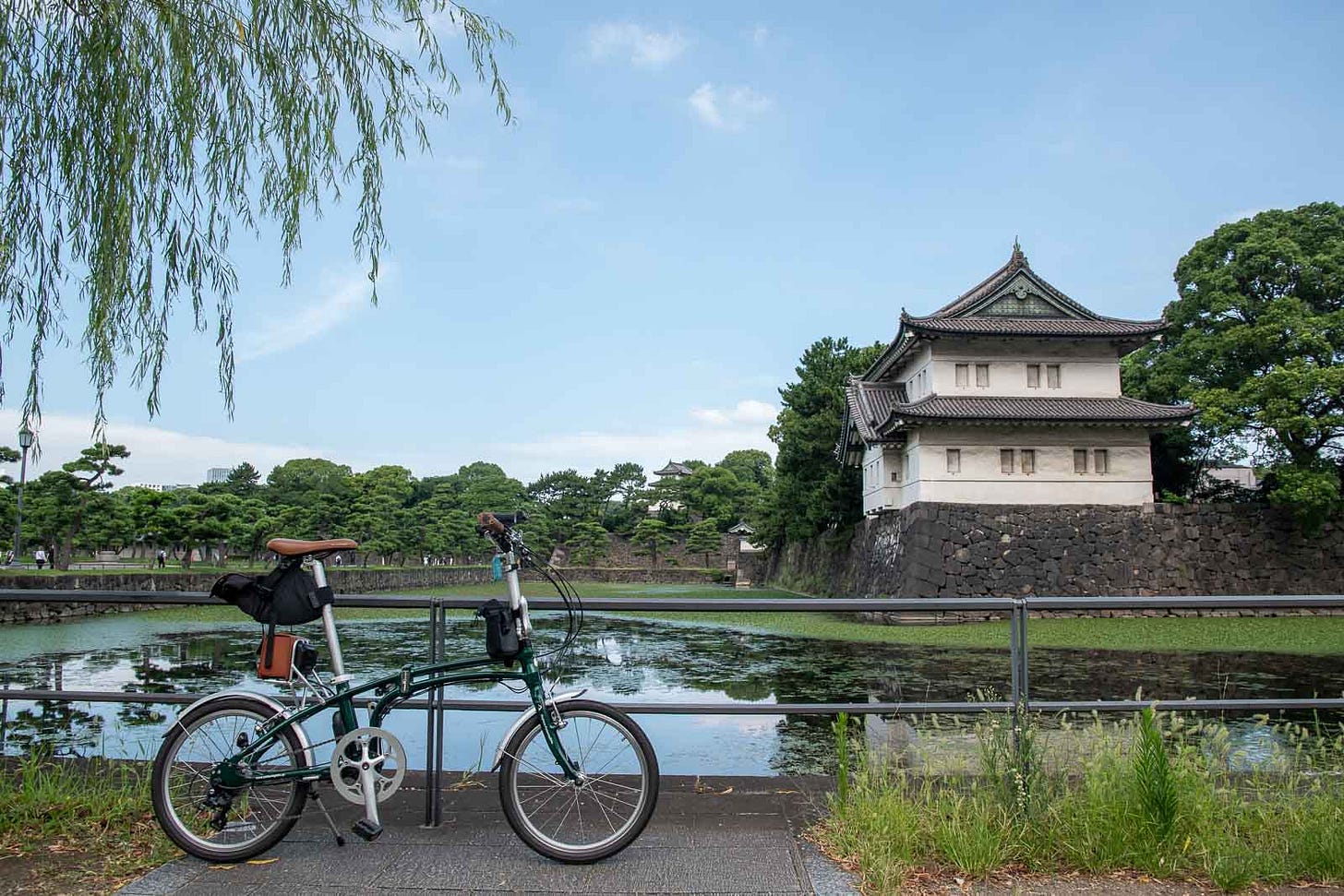
Coming from Tokyo Station, this is the first castle-like structure you’ll see. Framed by the moat and pine trees, it makes an excellent photo stop.
Area 2: The East Gardens
A beautiful garden, and admission is free. After a quick security check, you can enter from Otemon Gate, Hirakawamon Gate, or Kitahanebashimon Gate. Otemon is the most popular, but it gets crowded, so I prefer one of the other two, leaving the bikes outside.
Two highlights inside:
Ninomaru Garden
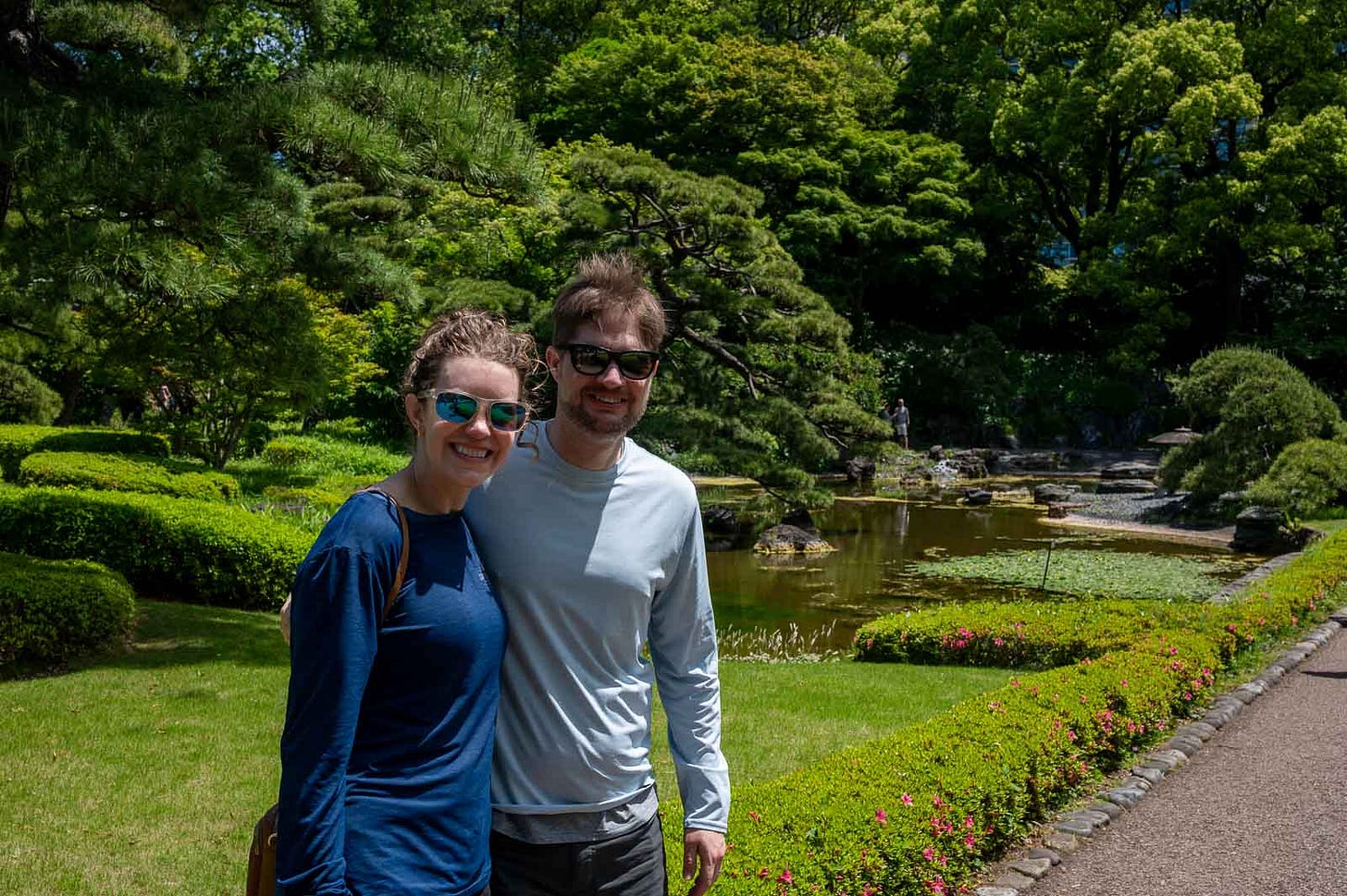
A beautiful Japanese garden with ponds full of colorful koi. Again, all of this sits in the middle of the city.
The Keep Foundation
The Palace is a former castle, but you won’t find a castle tower here. In 1657, the Great Fire of Meireki burned through most of Edo, taking the castle keep with it. The shogunate did plan to rebuild. The stone foundation you see today was constructed for exactly that purpose, built with massive granite blocks.
But the tower never came. Hoshina Masayuki, the powerful regent advising the young fourth shogun, argued that the money should go toward rebuilding the city instead. With the country at peace, a giant symbol of military power was no longer worth the cost. His view prevailed, and more than 360 years later, the foundation still stands empty.
You could easily spend more time here, but when I come here with my guests under my private e-bike tour, I’m always a little worried about the bikes waiting outside, so we usually head back out through the same gate fairly quickly.
Area 3: The Guided Palace Tour
If you’re really interested in the Palace, why not join the official guided tour? Remember that line at Kikyomon Gate? That’s this.
The tour runs twice a day and is free. Up to 300 same-day tickets are handed out on a first-come, first-served basis, and there’s also an advance booking system through the Imperial Household Agency website. Groups split by language, typically Japanese, English, Chinese, Spanish, and French, depending on staff availability. The whole thing takes about 75 minutes on foot.
Fujimi Yagura
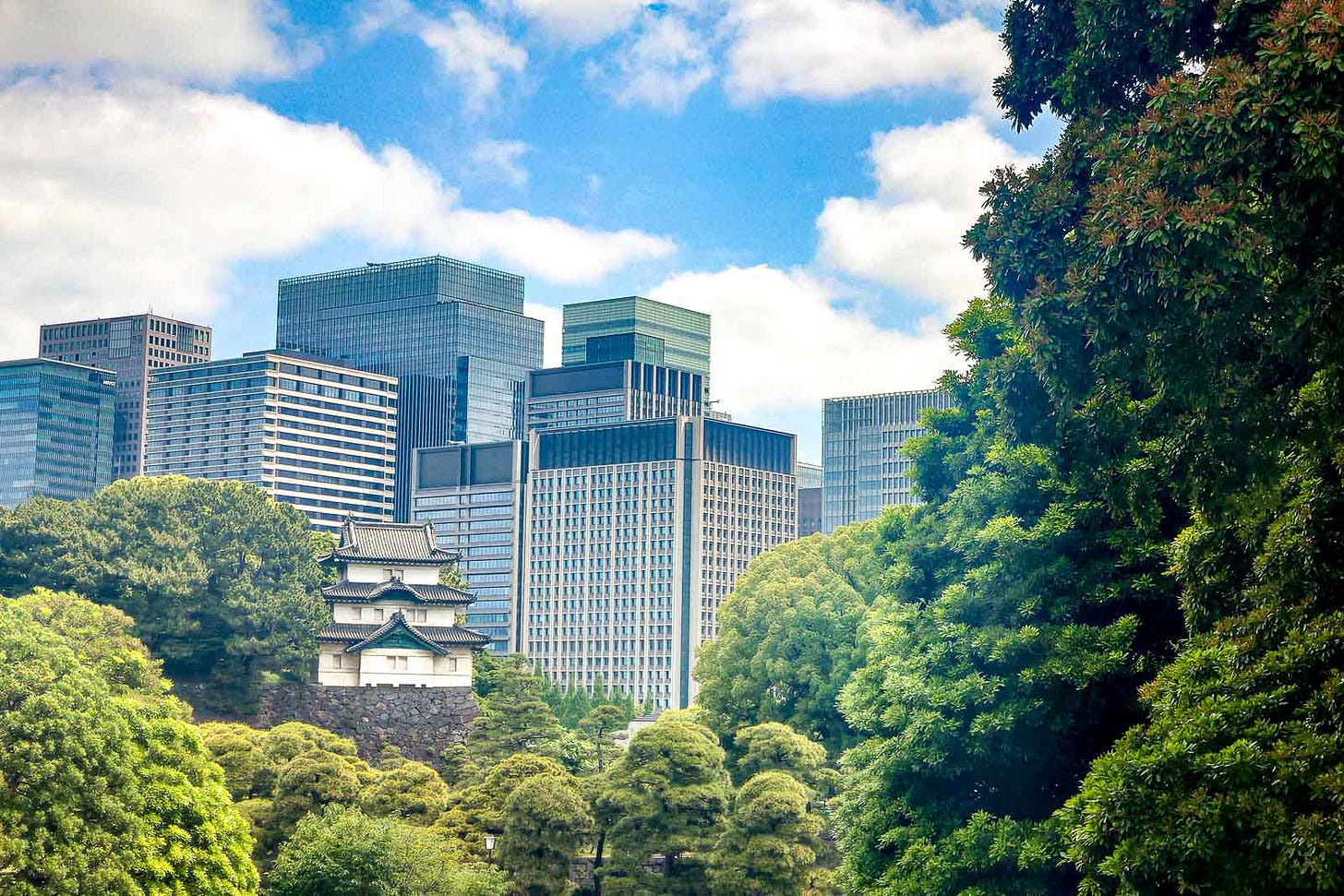
The tallest surviving structure from Edo Castle. This three-story tower is genuinely beautiful up close. Its name means “Mt. Fuji view,” and in the past, you probably could see the mountain from up there. I always get a little excited seeing a tower like this.
Nijubashi Bridge, From the Other Side
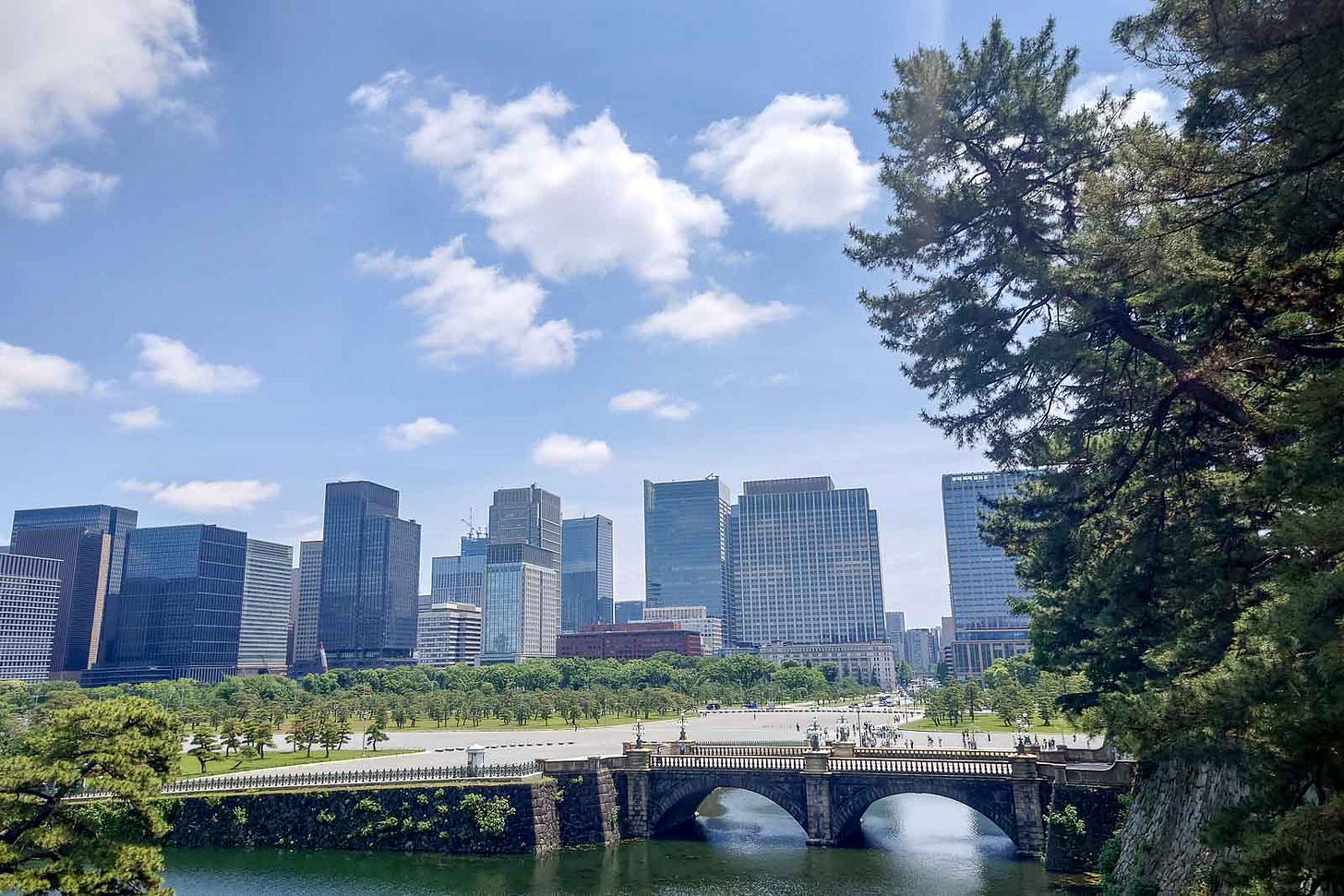
On the tour, you’ll actually stand on Nijubashi. We saw it earlier from the Outer Gardens, and now you’re on the opposite side, looking back out at the Tokyo business district from a completely new angle.
Bonus?
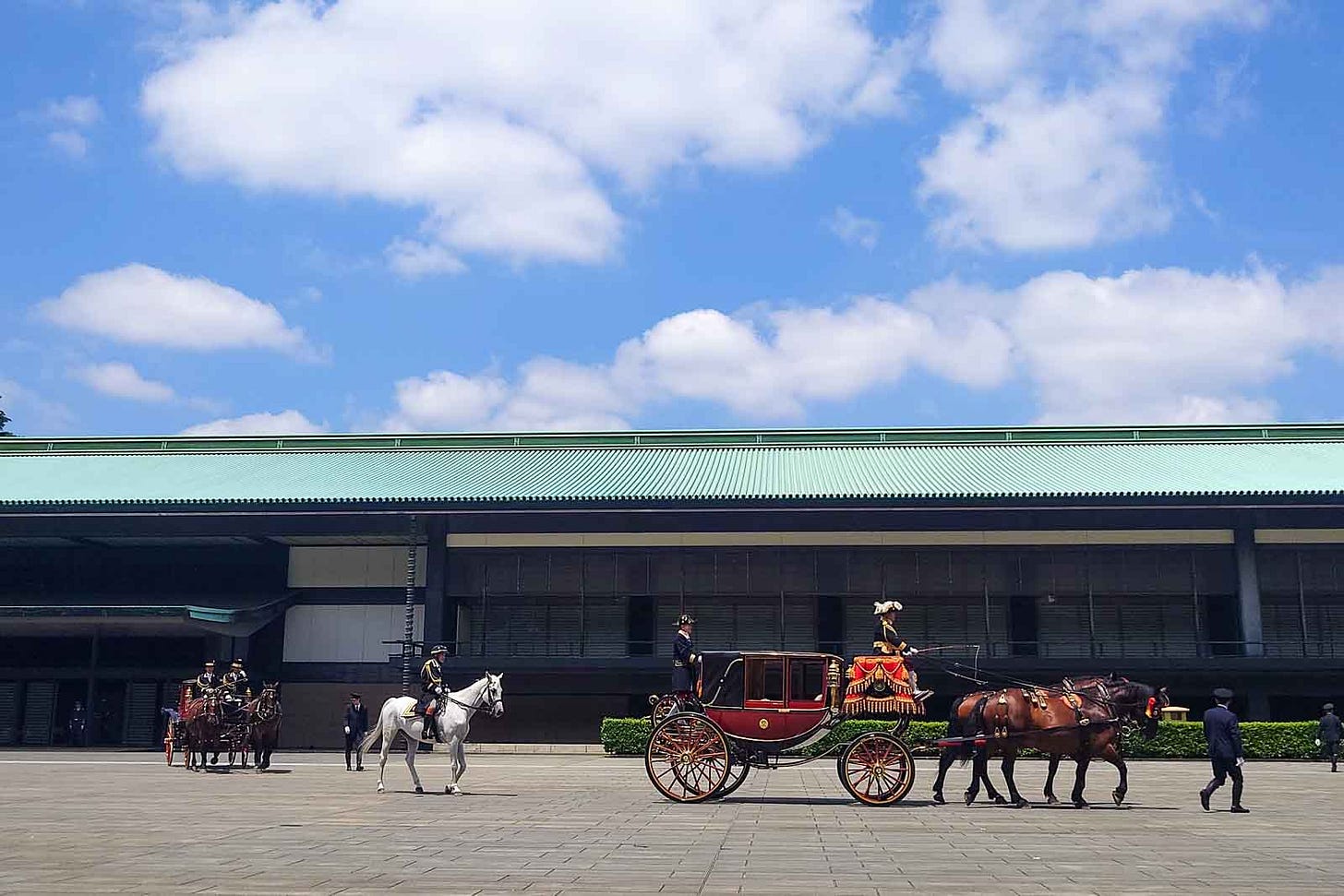
And sometimes, something extra.
When I took the tour myself, I happened to catch the arrival of a newly appointed ambassador. Whenever a new ambassador arrives in Japan, they traditionally travel by horse-drawn carriage or by car from Tokyo Station to the Imperial Palace to formally greet the Emperor. How lucky I was! Though I’ll admit, I’ve completely forgotten which country they were from.
Area 4: Where I Can’t Go
And then there’s Area 4, called Fukiage Gosho.
I’ve never been. I’m not a member of the Imperial family, and I’m certainly not a prince. So I can’t tell you a thing about what’s in there.
So, how was the virtual tour?
A virtual ride is one thing, but the real experience would be better, right? If you’re ever in Tokyo, let’s ride it for real.
Thank you for reading. Which part of the Palace would you most like to see?