
Conveying Authentic Japan: Kuboki's Journey with Tatami
May 8, 2026
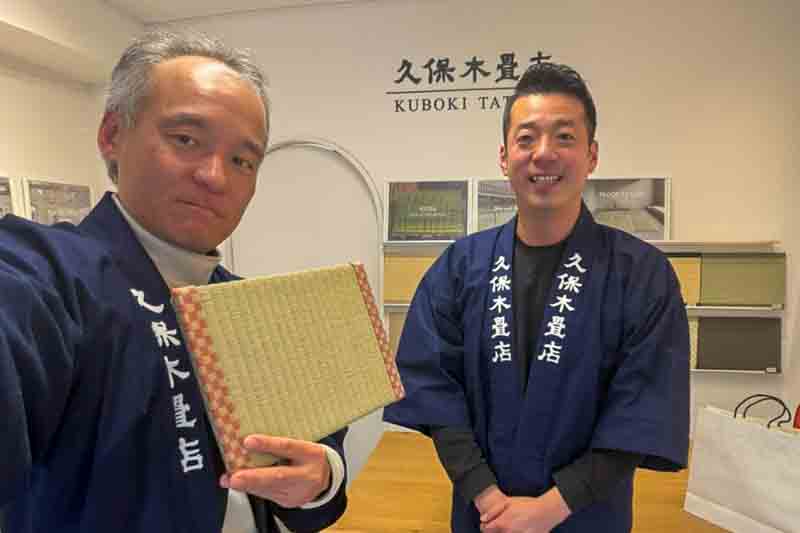
"Conveying authentic Japan." This phrase is so abstract that it's often difficult to truly understand. This is the first in a series of articles aiming to make this concept more concrete. This time, I interviewed Fumio Kuboki, president of KUBOKI TATAMI Co., Ltd., a company that manufactures tatami mats, which have traditionally been standard in Japanese homes.
1. Do You Fly Around the World?
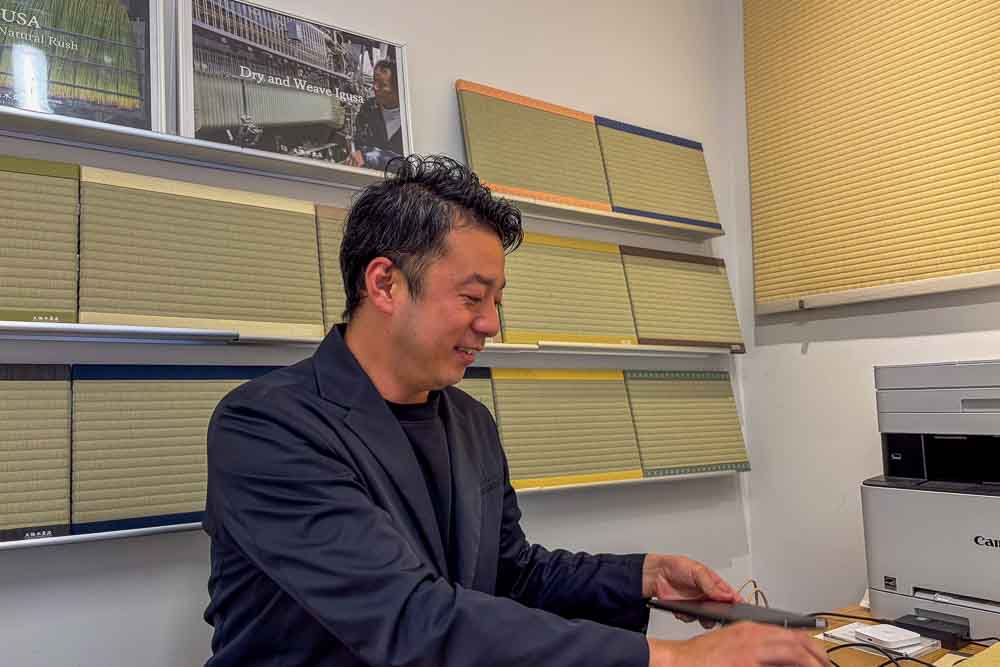
I just returned from a business trip to Sweden and Italy for this interview. To convey the greatness of tatami, just waiting around won't start anything. Whenever possible, I travel to the locations to convey its qualities directly.
2. Your Career Didn't Start at a Tatami Shop?
Despite my family having run a tatami shop for generations, I had no plans to take over the family business at first. I moved to Tokyo for university and subsequently started working for a construction company in the city, where I was involved in equipment design and site progress management.
However, when I returned home in 2019, my father informed me about the difficult situation of the tatami industry. He implied, "If the market size 30 years ago was 100, today it is only 5, and in the last 10 years, nearly half of the shops have either closed down or become almost inactive." I was absolutely shocked. Learning of this critical situation and driven by a desire to cultivate a new market, I decided to join the family business.
3. What is the Heart of Japan?
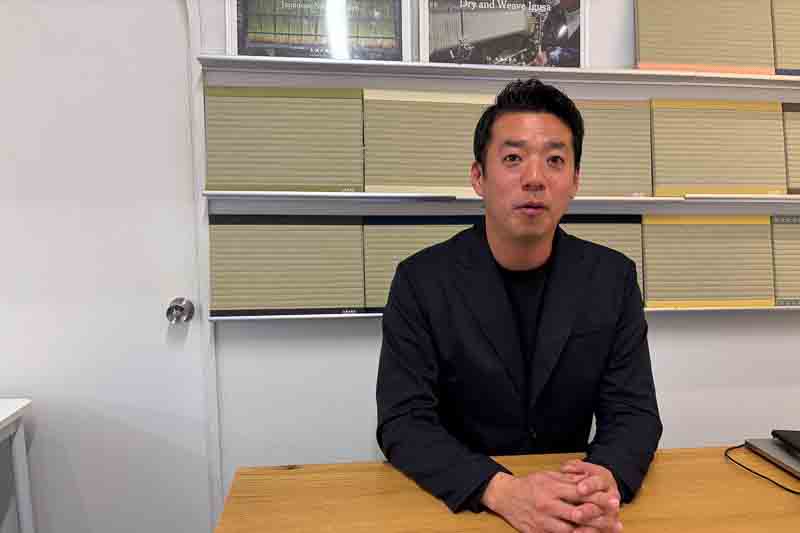
I still vividly remember my first sales trip to the United States.
"So, what exactly is the appeal of tatami?" asked my client.
"It is the heart of Japan." I thought this was a very good answer, but he asked me again,
"What exactly is the heart of Japan?"
I realized my answer was far too abstract, and I couldn't convey the appeal of tatami at all. I, the very person selling tatami, knew absolutely nothing about the product.
4. How Do You Explain Tatami to Someone Who Has Never Seen It?
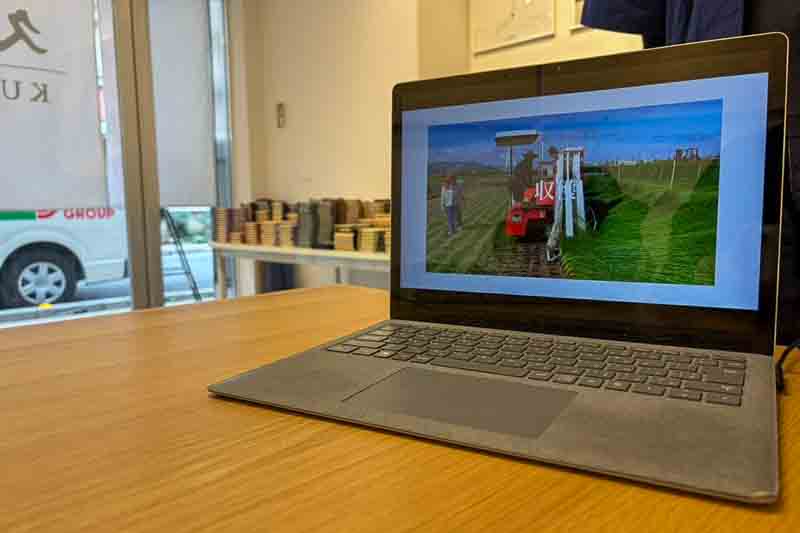
"I need to learn more about tatami." Fueled by my embarrassing experience overseas, I went alone to stay and work at an igusa (rush) farm in Yatsushiro City, Kumamoto Prefecture. Yatsushiro City is Japan's largest producer of igusa, used to make tatami, accounting for 90% of domestic production. At the igusa farm, I learned a lot about the very origins of the material, getting covered in mud and experiencing the mud-dyeing process.
From each of these experiences, I try to convey the benefits of tatami in concrete and scientific terms. For example, tatami contains aromatic compounds like "phytoncide" found in igusa and "vanillin" resulting from the mud-dyeing process. Furthermore, the natural materials of tatami have a scientifically proven relaxing effect, making the parasympathetic nervous system dominant and regulating the autonomic nervous system.
The desire to preserve tradition alone is not sufficient. Only by properly explaining its benefits can it be understood and used. Once used, the tradition can be preserved.
5. Won't It Get Moldy If Taken Overseas?
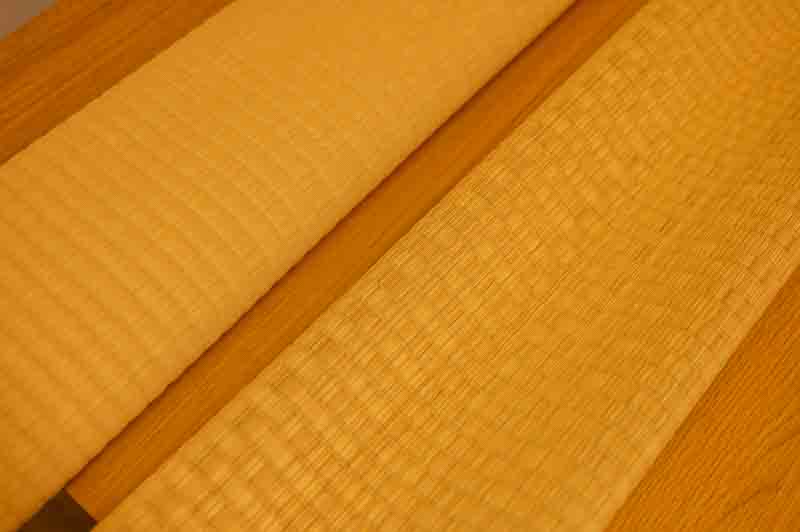
Actually, the dry climates found overseas are a much better environment for tatami (igusa) than Japan's humidity. Also, there are different grades of igusa. High-quality mats not only maintain their condition for years but also develop an aesthetic appeal over time. However, if poor-quality materials are used, the surface will fade in just six months. I believe that by thoroughly understanding and explaining its value, I can properly convey what makes a good product.
6. What Are You Doing to Make Tatami More Widely Known?

I want to convey the greatness of tatami not just through words, but as an "experience". In Fukushima Prefecture, our company operates "Tatami Village," a complex that integrates factory tours, workshops, and a cafe. This was modeled after successful examples like the metal casting manufacturer "Nousaku" in Toyama Prefecture.
For people overseas or far away, we also have an Instagram account like a catalog. By posting various use cases, such as in a Los Angeles vacation home or corporate offices, we can visually explain the possibilities of tatami.
And then the Ginza store! Ginza, the world-famous shopping district in Tokyo, welcomes many foreign visitors. It will be the most appropriate starting point as a base for broadcasting tatami culture. Through workshops here, I hope to help Japanese people rediscover the greatness of tatami while also introducing it to people from overseas.
7. What Do You Want to Do With the Business Moving Forward?
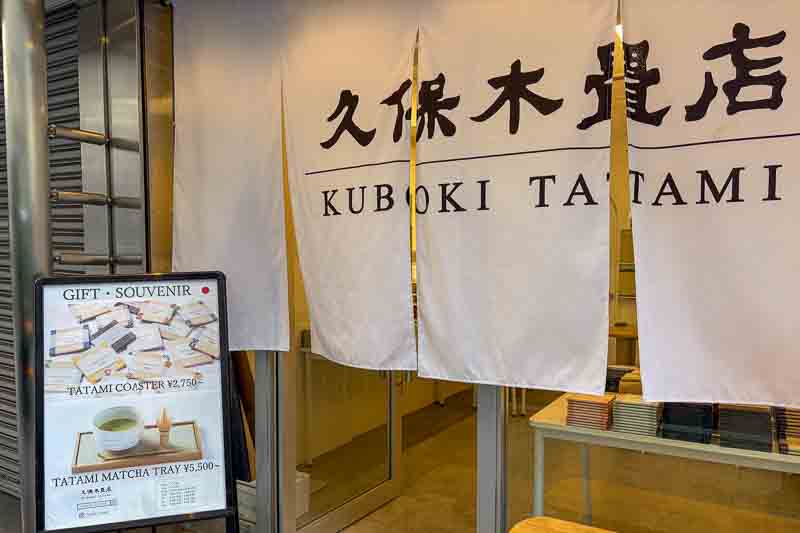
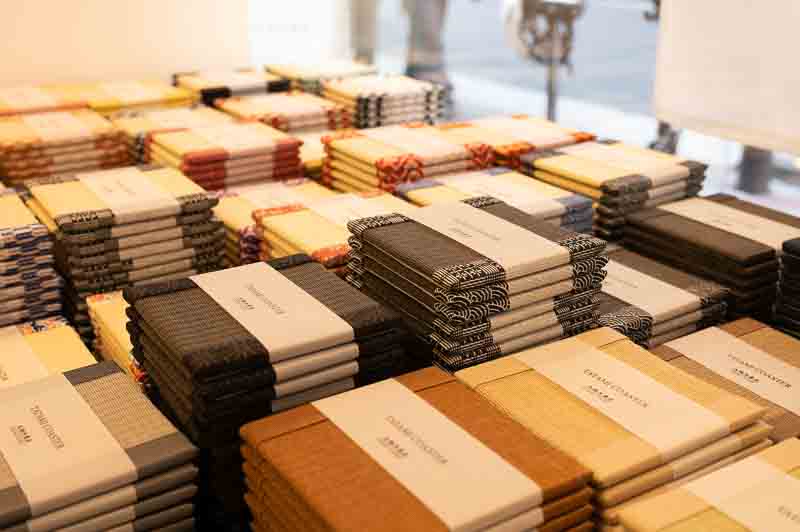
In the future, I want to focus not only on selling products like coasters, but also on a business that provides tatami as a "material" for interior elements such as chairs, tables, and store counters.
I want people to know the greatness of tatami and Japanese culture by conveying not just tatami as objects (products), but also the experiences (contents) through the manufacturing process. One of my goals is to create a base where people from all over the world can directly experience the greatness of tatami. It would be great to eventually establish "Tatami Village” in Ginza.
After the Interview, I felt…
Conveying "authentic Japan" might be an expression that seems the easiest to understand, yet is the most difficult. KUBOKI TATAMI Co., Ltd., is not offering a superficial "tourist trap" experience; they are facing true materials with a gritty determination, firmly resolved to connect tradition to the future. Did the passion of a "genuine artisan" come across?
Talking with Mr. Kuboki made me question on the way home whether I am truly conveying the authentic charm of Japan in my own bike tours. One takeaway is the importance of explaining the background and giving my guests a chance to experience.
By the way, Mr. Kuboki says he likes yakitori, Japanese grilled chicken skewers. I thought I'd like to chat with him over yakitori next time. After all, yakitori is one of Japan's representative meals... (To be continued?)