Nihonbashi: Where Every Road in Japan Begins — Nobody Looks Up, Nobody Looks Down
June 28, 2026
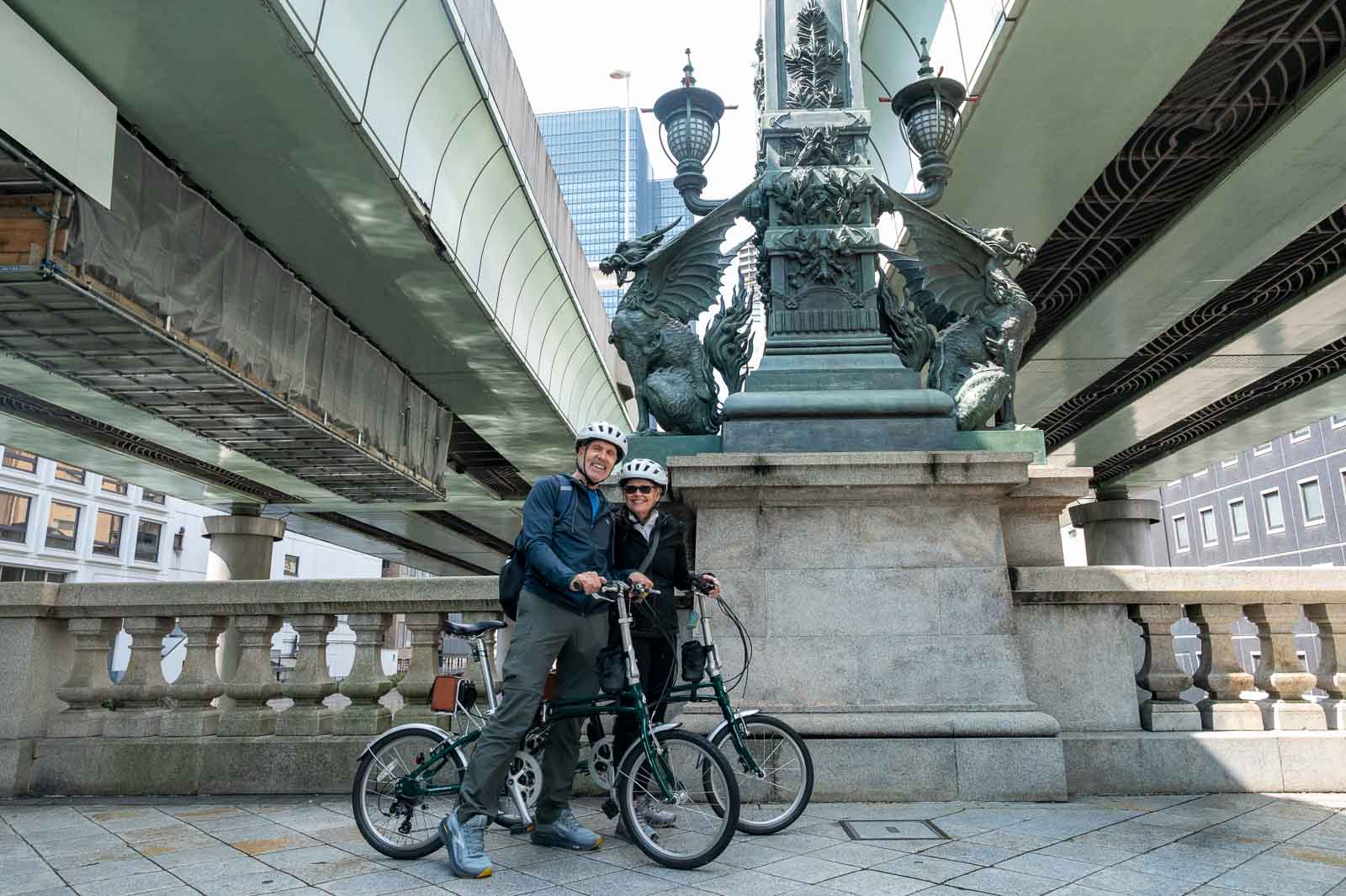
If you joined my bike tour, you might have crossed Nihonbashi bridge — and you might remember me stopping there to share a bit of history. But the truth is, I never have enough time to tell you everything about it.
So here's the full story, without the time pressure.
Nihonbashi is the center as the name describes
This is the typical script I prepare for my bike tour here.
Nihonbashi literally means
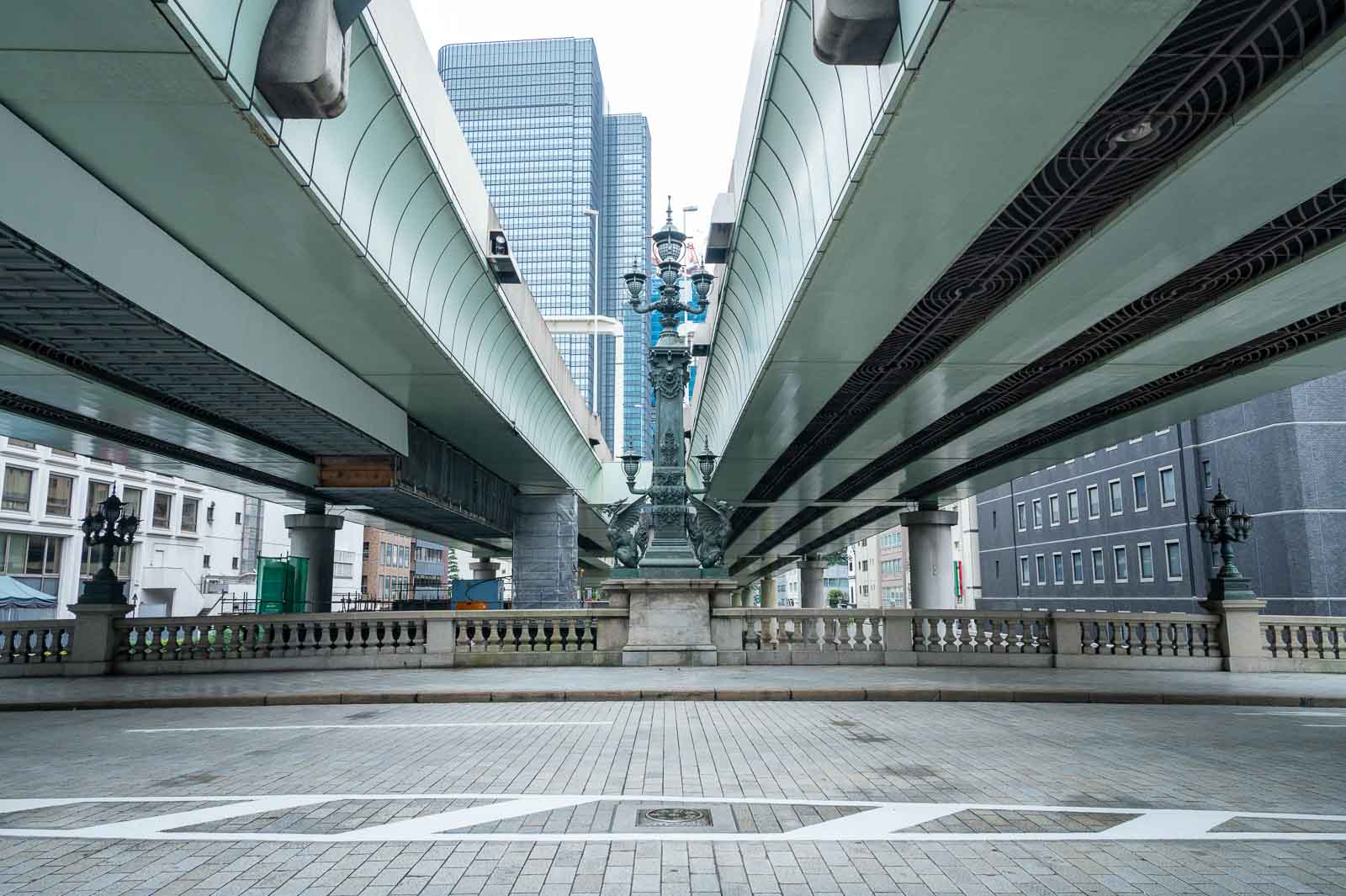
Nihonbashi is actually made up of two Japanese words. "Nihon" means Japan — the same as "Nippon." And "bashi" means a bridge in Japanese. So, Nihonbashi means "Japan bridge."
Nihonbashi, center in the past
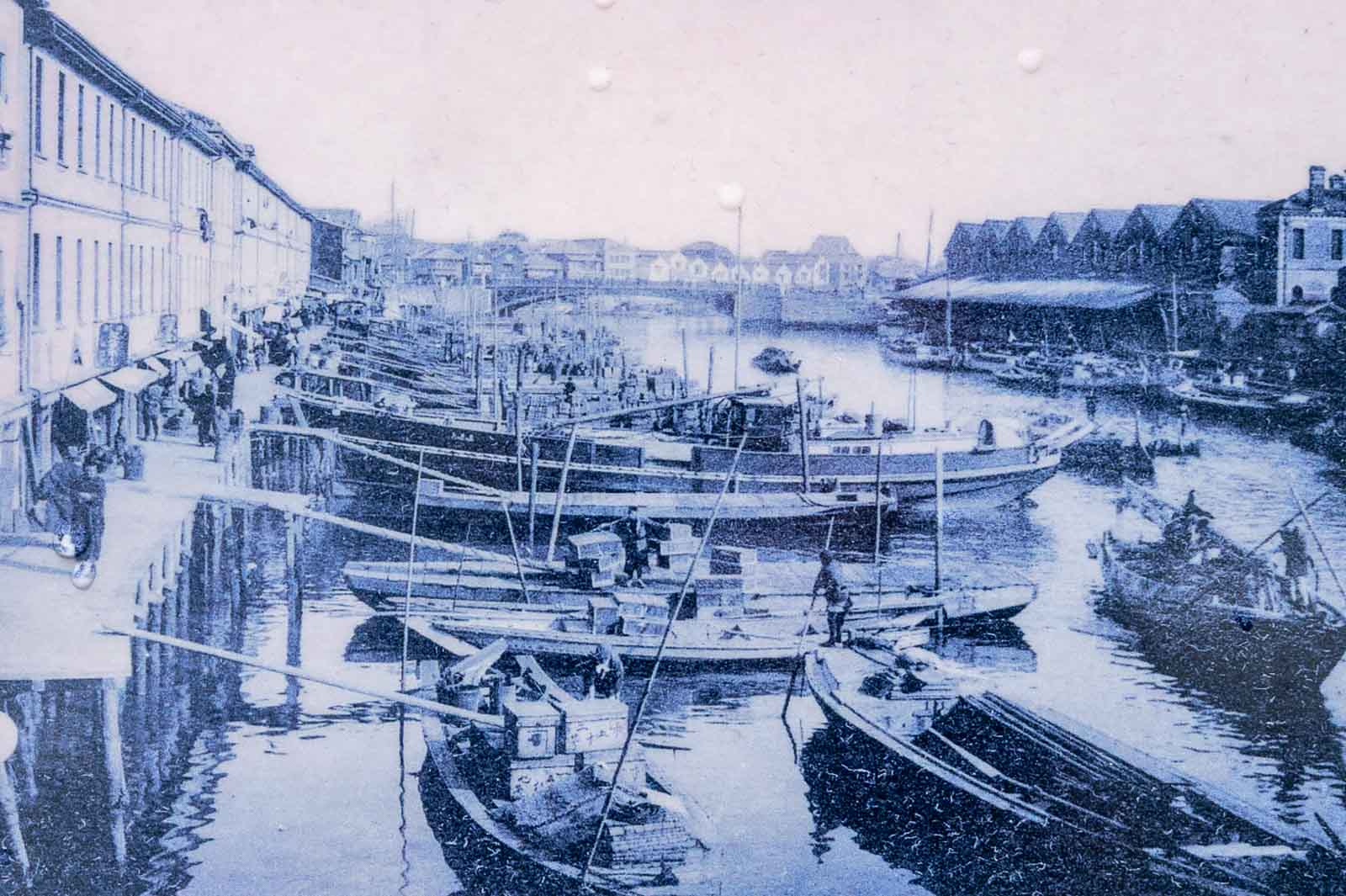
As the name says, Nihonbashi, or Japan bridge, has been the center of this country both then and now. In the past, at the time of the Edo Samurai era, the five major roads (Tokaido, Nakasendo, Koshu Dochu, Oshu Dochu, Nikko Dochu) started at this bridge, so it was a huge junction. Also there used to be a port for the market at the riverbank near this bridge, so we can easily imagine how bustling this area must have been.
Even after the samurai era, Nihonbashi stood as the center of this country. The business center in Tokyo was established as if it surrounded the bridge. For this reason, JPX, Mitsukoshi Department Store, and Takashimaya Shopping Center are located in this area.
Nihonbashi, after 1964
One major milestone in Tokyo is the 1964 Olympics. Japan was selected to host the Olympics in 1959, giving the country only five years to prepare. The infrastructure had to be rapidly built at that time. One major challenge was highways, but Tokyo had so many buildings and houses that they had no space to build them.
Their solution was drastic. They decided to build the highways over the rivers or fill in the rivers entirely and build highways in their place.
This unique idea contributed to the success of the Olympics, and the highways were left as an Olympic legacy. However, there was a drawback: the landscape over the historical Nihonbashi was destroyed. The highway was built over the river and the bridge, covering it like a blanket — no one can see the sky when crossing the bridge.
Nihonbashi, center even now
Now, Nihonbashi doesn't seem to be the commercial center of this country any longer. Major shopping areas have shifted to Ginza, Shibuya, or Shinjuku. But it is still the geographical center of this country.
If you look at the very center of this bridge, you will find a plaque on the road. It marks point zero. Every road sign in Japan still shows the distance from Nihonbashi. For example, if you see a sign saying "30km to Tokyo", it is 30km from Nihonbashi.
Nihonbashi, to 2040
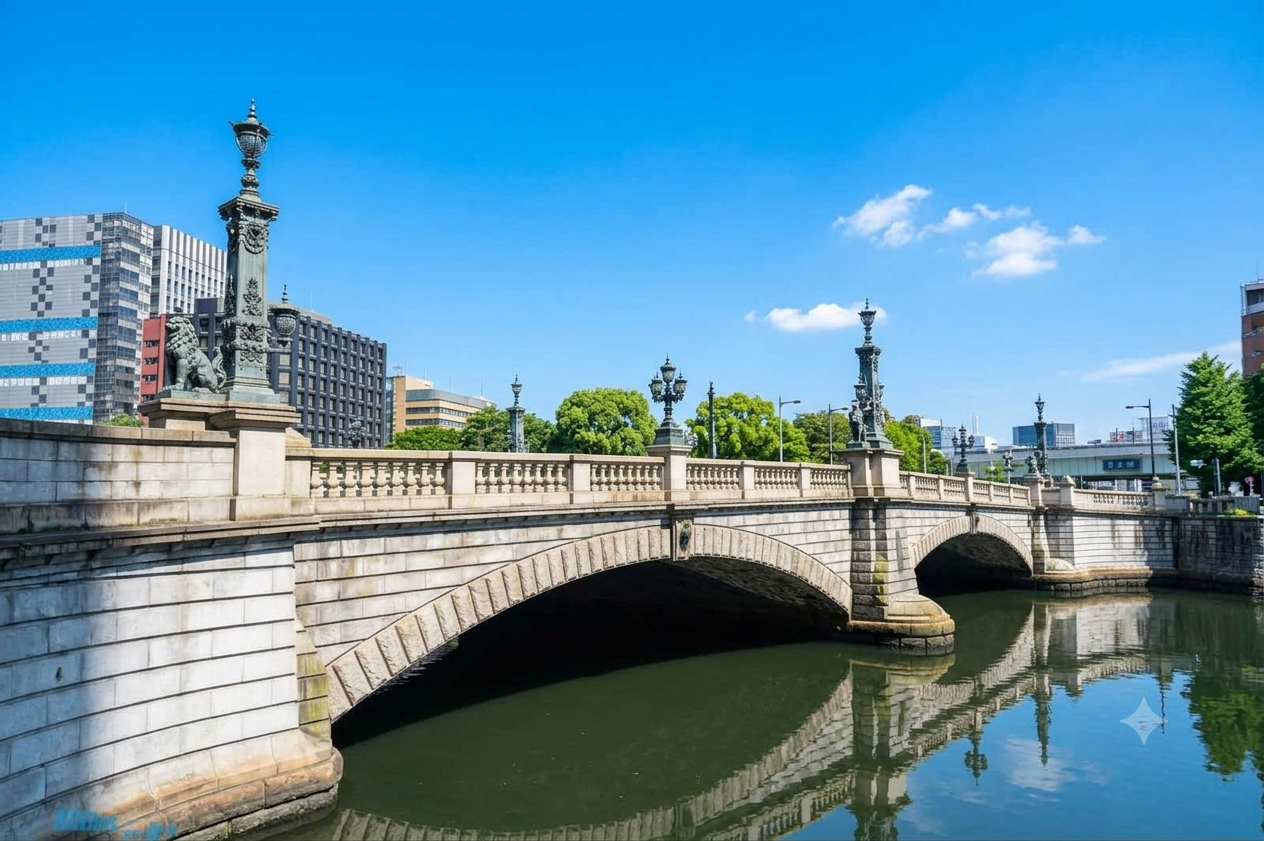
The Japanese government announced a plan in 2019. Since the highway is aging, they have decided to remove it from above Nihonbashi and relocate it underground. Once completed around 2040, the blue sky over the bridge will be fully restored (as in the AI-generated picture).
2040 is a bit away, but if I am still a bike tour guide in Tokyo, I would like to see the new landscape with my guests.
Stories that have not been told during my bike tour
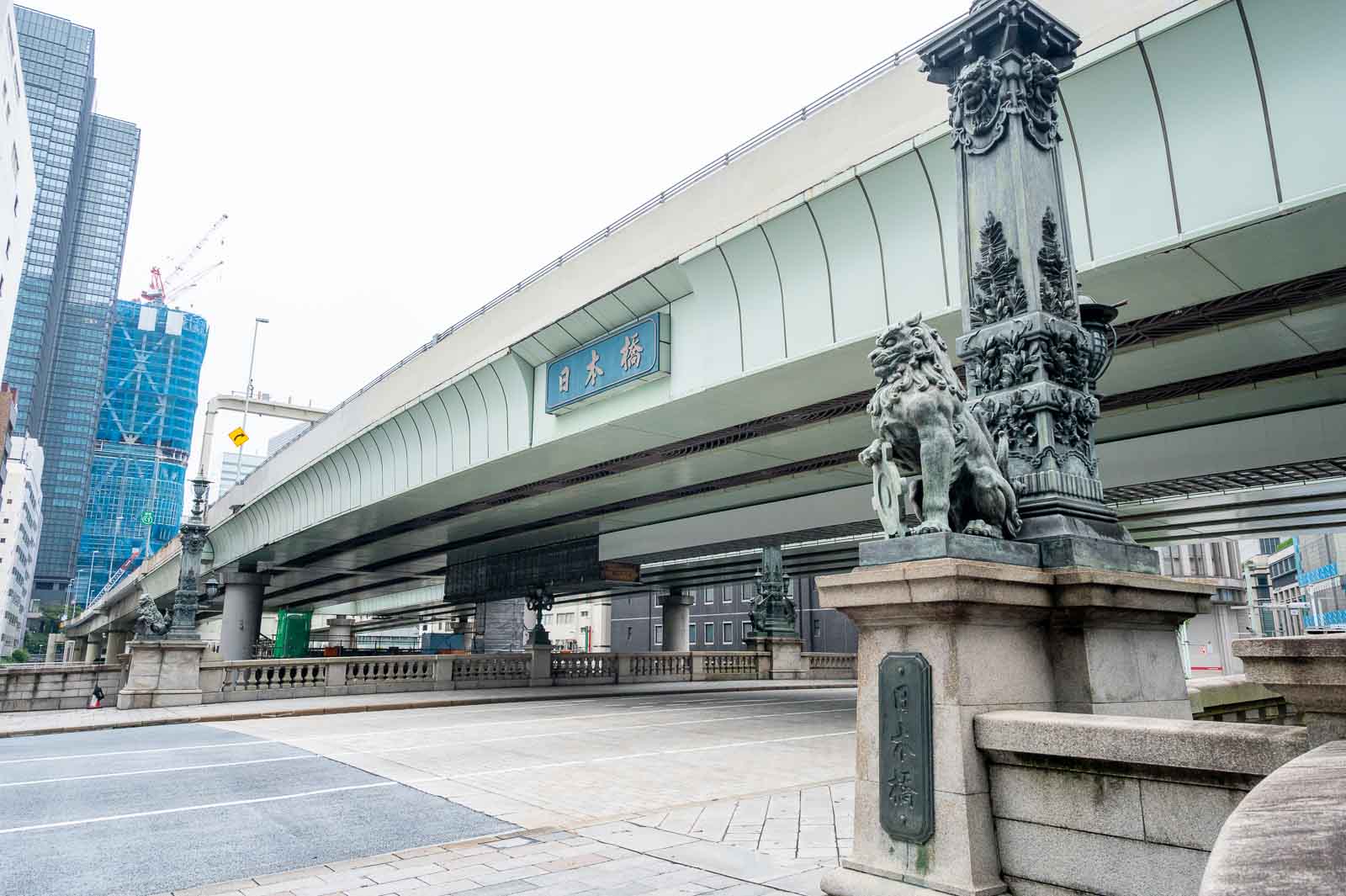
My bike tour is not a Nihonbashi tour, so I always have to cut some parts. Here are three more stories as an appendix. Two are related to the catastrophes of Tokyo, and the last one is my bucket list.
Nihonbashi and the Great Kanto Earthquake in 1923
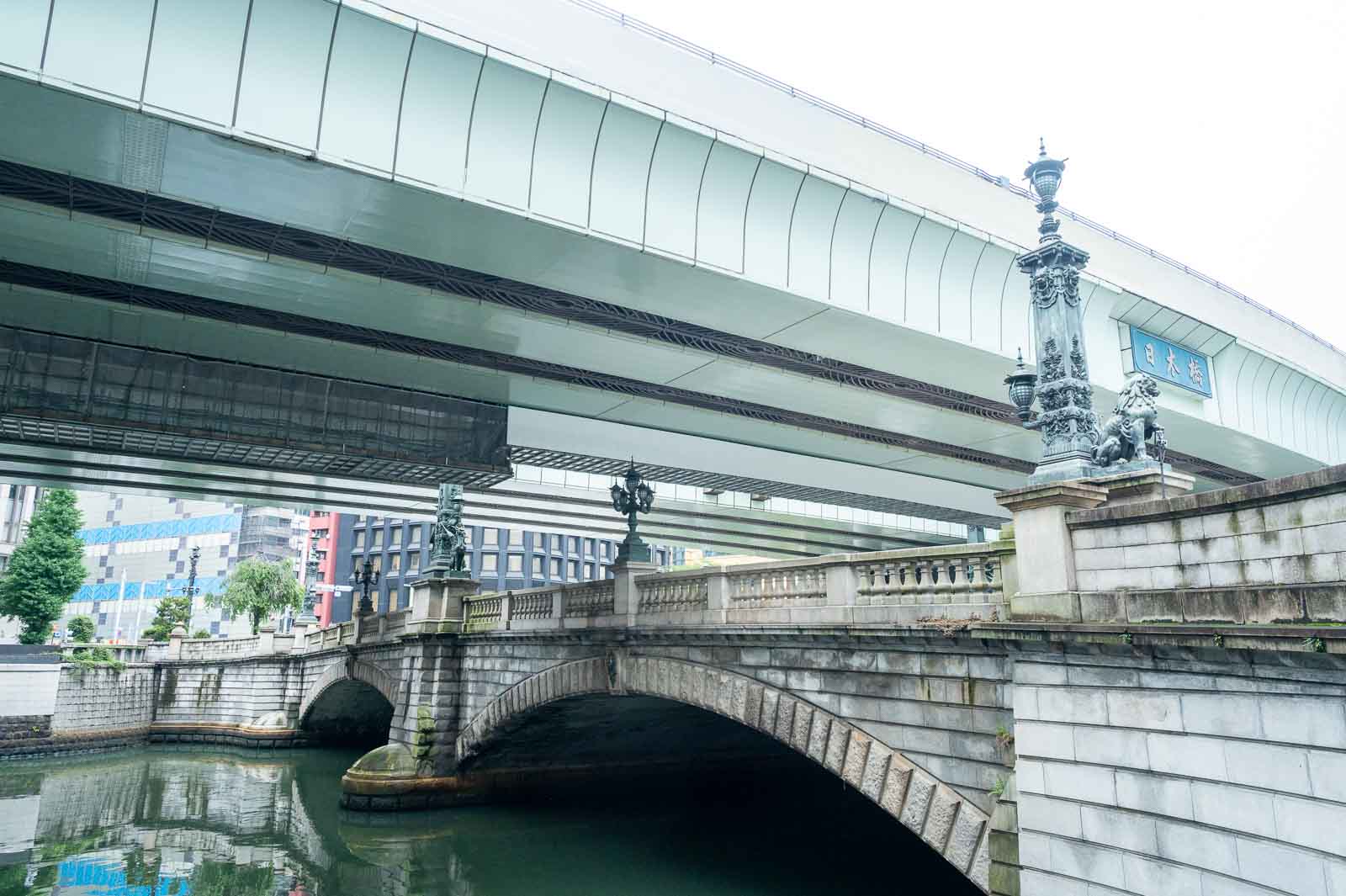
Japan often has earthquakes. One of the most serious in Tokyo occurred in 1923 at lunchtime, killing over 100,000 people. This earthquake left a serious impact on Nihonbashi bridge and its area.
The bridge itself was solidly built of stone, so it didn't fall down. But burning debris floated down the river and piled up against the bridge, causing a huge fire. You can still spot some black dots on the bridge — the remnants of that fire.
Also, the Nihonbashi area in those days was home to a vibrant fish market, but almost all of it was destroyed by fire. It was the end of the Nihonbashi fish market, and the beginning of the Tsukiji Market.
Nihonbashi and WWII in 1945
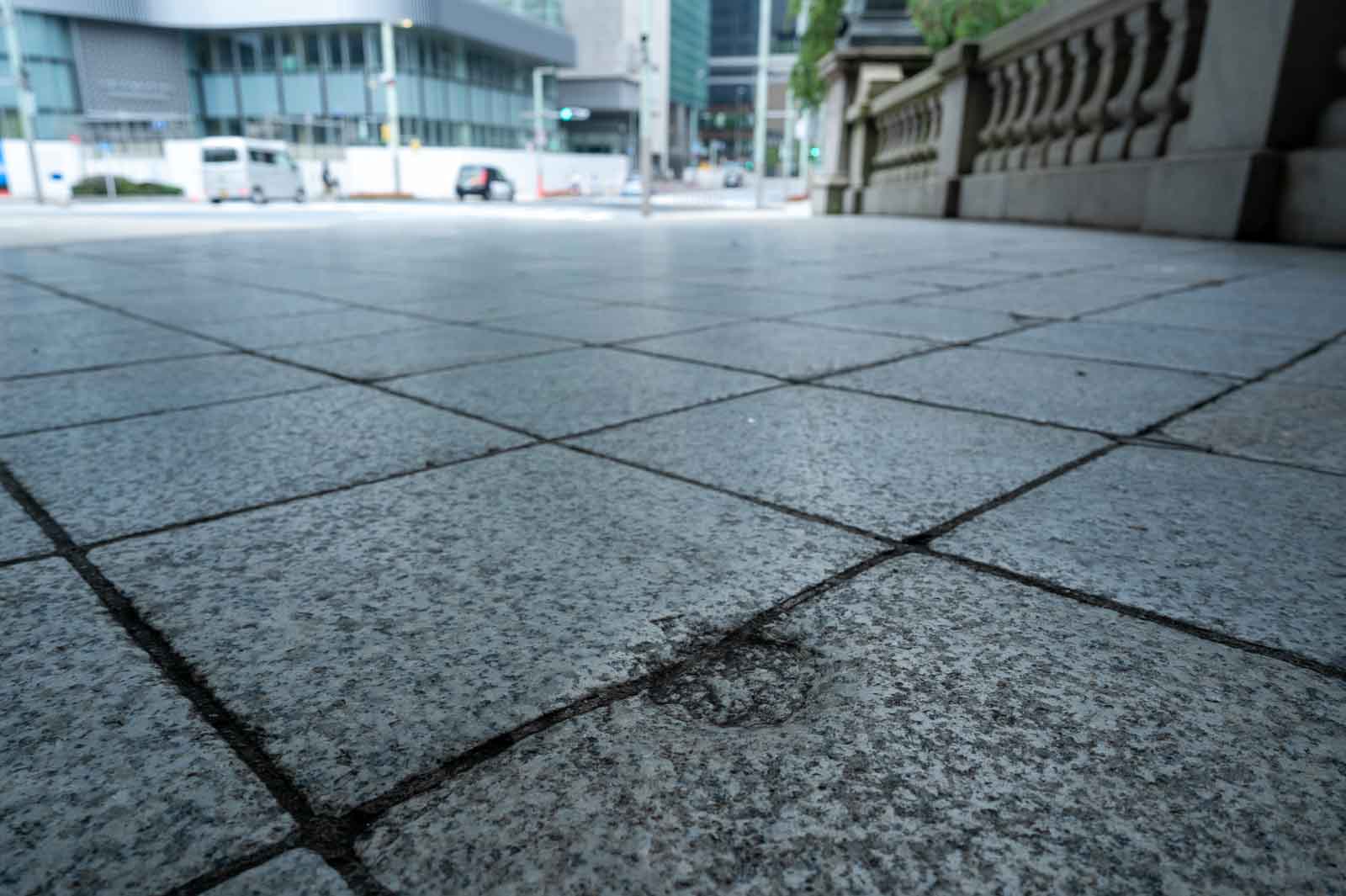
Another catastrophe came at the end of WWII, during which Tokyo was firebombed heavily. Nihonbashi was one of the areas hardest hit. The raids occurred over 80 years ago — most readers and I were not yet born — but you can still find remnants of the tragedy on the bridge.
When you walk on the bridge, you will see scorch marks on the stonework. These are traces left by the fires. You will also find holes in the steps of the bridge, left when firebombs were dropped. You might think these are simply signs of age, but they are quiet reminders of the reality of WWII.
Nihonbashi and my bucket list
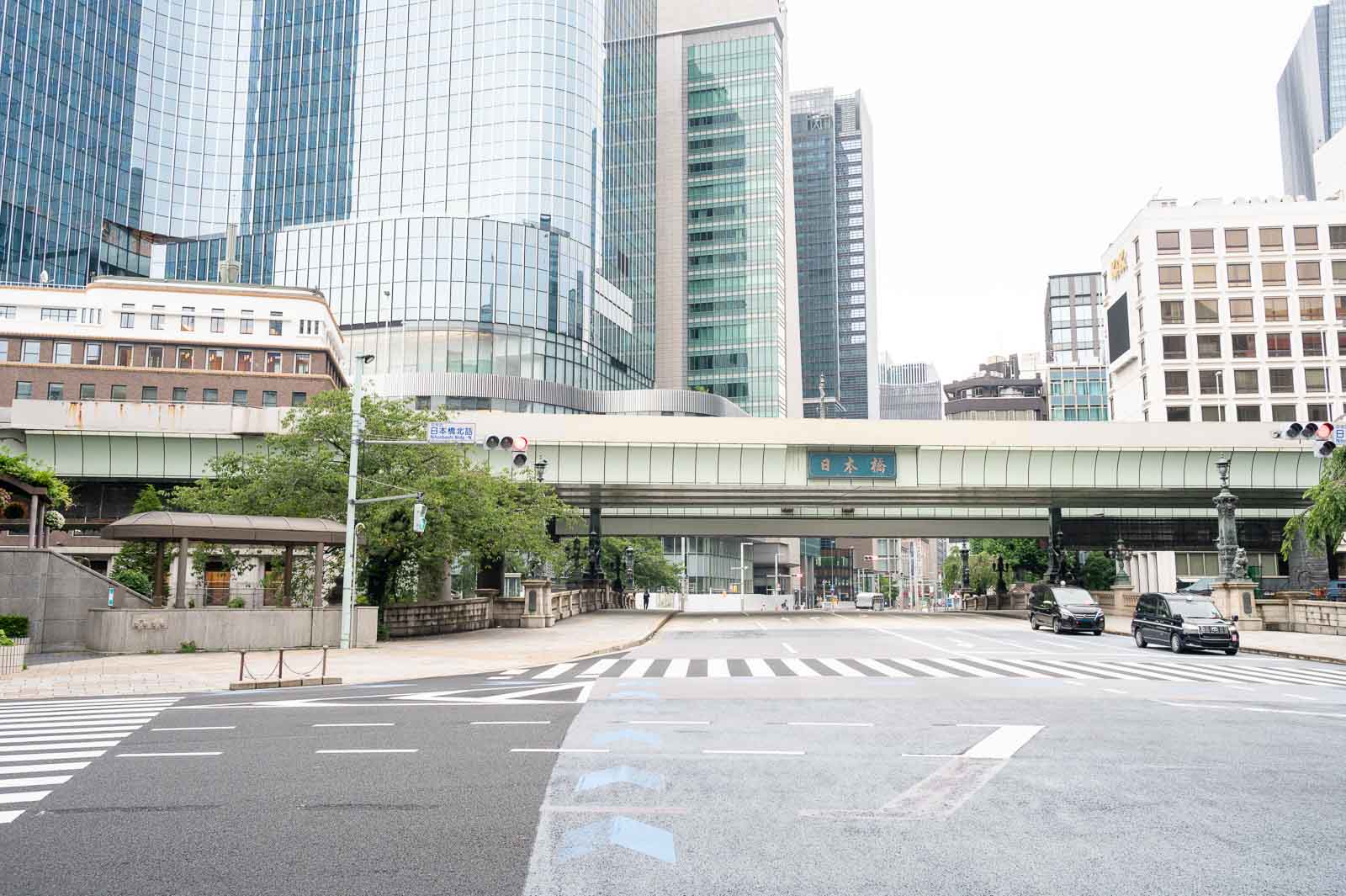
Nihonbashi used to be the starting point for travelers during the Edo period. And now, for me too.
It has been the starting point for five major roads in Japan. I want to cycle through all five one day.
In 2019, I completed the Old Nikko Dochu, which lasts about 140km (or 80mi) to Nikko. It took me two days.
In 2022, I completed the Old Tokaido, which lasts about 450km (or 300mi) to Kyoto. It took me one week.
In 2023, I completed the Old Oshu Dochu, to Shirakawa. It wasn't too challenging — two days was enough.
I have two more that I have not completed: Old Nakasendo and Old Koshu Dochu. These two are the toughest as they go along the hilly line from Tokyo. Especially Old Nakasendo goes through 69 stations from Nihonbashi to Kyoto, which is the longest and hilliest.
I am youngest for the rest of my life. When I was young, I had lots of stamina but no money. When I become old, I will hopefully have money but no stamina.
Then, when should I start my next bike journey to complete these five main roads?